
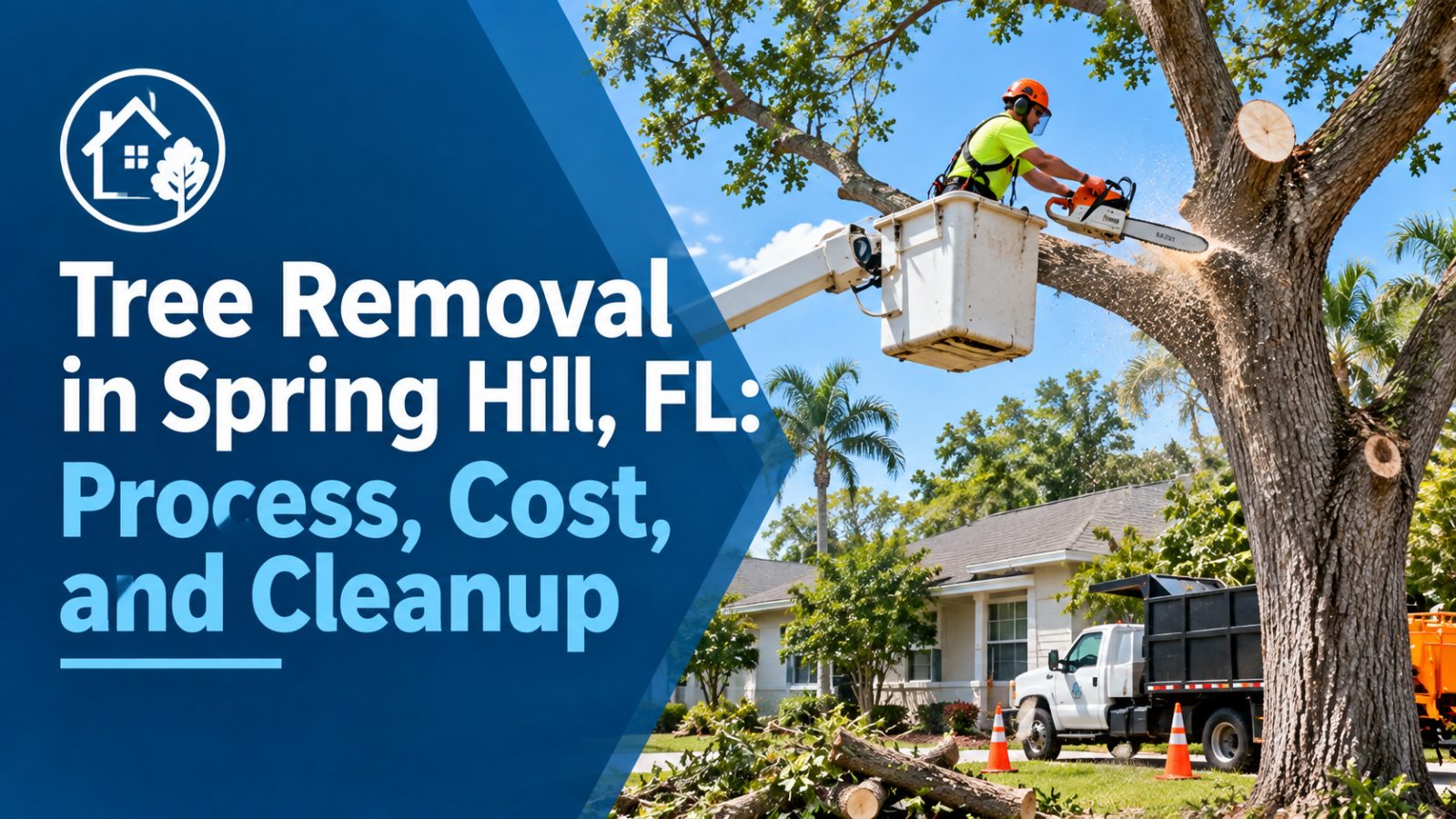
Tree removal is sometimes necessary to protect your home, improve property safety, or make room for landscaping and construction projects. In Spring Hill, Florida, homeowners deal with unique tree care challenges, including heavy rainfall, strong winds, tropical storms, and hurricane season. While trees provide shade, beauty, and environmental benefits, damaged, diseased, or unstable trees can become serious hazards if left untreated.
Understanding the tree removal process, expected costs, and cleanup services can help homeowners make informed decisions. Whether you have a dead oak tree, an overgrown pine, or a tree threatening your roof, hiring an experienced professional ensures the job is completed safely and efficiently.
When Is Tree Removal Necessary in Spring Hill, FL?
Not every damaged or unhealthy tree needs to be removed. However, certain conditions indicate that removal may be the safest option.
Dead or Dying Trees
Dead trees gradually lose their structural strength. Their branches can break unexpectedly, especially during storms or periods of strong winds. If a tree has extensive decay, dead limbs, or significant trunk damage, professional removal may prevent property damage and injuries.
Storm-Damaged Trees
Spring Hill experiences severe weather that can weaken trees and damage their root systems. Trees leaning suddenly, split trunks, or large broken branches may require immediate attention. Even trees that remain standing after a hurricane can become unstable.
Trees Growing Too Close to Structures
Trees planted near houses, garages, fences, and driveways can create problems as their roots and branches expand. When pruning cannot resolve the issue, removal may be necessary to protect nearby structures.
Diseased or Infested Trees
Fungal infections, pest infestations, and internal decay can weaken trees over time. An arborist can evaluate the damage and determine whether treatment, pruning, or complete removal is appropriate.
Understanding the Tree Removal Process
Professional tree removal involves several steps. Knowing what happens before, during, and after the project helps homeowners prepare their properties.
1. Initial Tree Inspection
The process begins with an assessment of the tree’s condition, size, location, and surrounding environment. Tree professionals examine the trunk, branches, roots, and signs of disease or structural weakness.
They also identify potential obstacles, including power lines, nearby buildings, landscaping, and fences.
2. Providing a Tree Removal Estimate
After the inspection, the contractor provides an estimate based on the complexity of the project. The quote should explain the expected labor, equipment, removal method, and cleanup services.
Homeowners should ask whether stump grinding, hauling, and debris disposal are included in the price.
3. Preparing the Property
Before removal begins, the work area is secured. Workers identify safe equipment access points and establish a controlled drop zone.
Vehicles, outdoor furniture, decorations, and other movable belongings should be relocated whenever possible.
4. Cutting and Removing the Tree
Depending on the tree’s size and location, professionals may remove it in sections rather than cutting it down in one piece.
Climbers, ropes, chainsaws, lifts, and other specialized equipment may be used to lower branches and trunk sections safely. This controlled approach is particularly important when trees are close to homes or other structures.
5. Stump Grinding and Final Cleanup
Once the tree is removed, homeowners can choose to have the remaining stump ground down. Stump grinding reduces the visible stump below ground level and makes the area easier to landscape.
The crew can also collect branches, remove logs, rake the surrounding area, and haul away debris according to the agreed service package.
How Much Does Tree Removal Cost in Spring Hill, FL?
Tree removal costs vary depending on the tree’s size, condition, accessibility, and location. A small tree in an open yard generally costs less to remove than a large tree positioned close to a house.
The following figures are general budgeting estimates, not guaranteed local quotes.
| Tree Removal Service | Estimated Cost |
|---|---|
| Small tree removal | $150 to $500 |
| Medium tree removal | $400 to $1,000 |
| Large tree removal | $800 to $2,000+ |
| Very large or hazardous tree | $2,000 to $4,000+ |
| Stump grinding | $100 to $500+ |
Factors That Affect Tree Removal Pricing
Tree size and height: Larger trees require more labor, specialized equipment, and additional safety precautions.
Tree condition: Dead, leaning, or storm-damaged trees may require more complicated removal techniques.
Location and accessibility: Trees near houses, utility lines, pools, and fences require careful section-by-section removal.
Equipment requirements: Some projects need cranes, bucket trucks, or additional crew members, increasing overall costs.
Cleanup and disposal: Hauling away branches, logs, and wood chips can affect the final estimate.
Getting multiple written estimates helps homeowners compare services and understand exactly what they are paying for.
Why Cleanup Matters After Tree Removal
Removing a tree is only part of the job. Proper cleanup makes the property safer, more attractive, and easier to use.
Branch and Debris Removal
Branches, leaves, and wood fragments can create tripping hazards and interfere with lawn maintenance. Professional cleanup ensures these materials are collected and disposed of properly.
Stump Grinding and Yard Restoration
An exposed stump can attract insects, interfere with mowing, and limit landscaping options. Grinding it down creates a more usable outdoor space.
Homeowners may also consider filling the remaining hole with soil and preparing the area for grass or new plants.
Wood and Log Disposal
Depending on the agreement, contractors may haul away large logs or cut them into manageable firewood pieces. Discuss disposal preferences before the project begins.
The Importance of Ongoing Tree Care in Spring Hill
Tree removal is sometimes unavoidable, but regular maintenance can prevent many problems. Proper pruning, inspections, and storm preparation help preserve healthy trees while reducing potential hazards.
How tree trimming in Spring Hill, FL should be timed around Florida’s growing season and hurricane season, and how much canopy a healthy tree can spare. Working with Tree Care by Robert Miller can help homeowners understand appropriate maintenance practices, identify hazardous branches, and determine when professional tree removal is necessary.
Schedule Tree Inspections Before Hurricane Season
Inspecting trees before hurricane season gives homeowners time to address weak branches, structural problems, and other potential hazards.
Avoid Excessive Pruning
Removing too much canopy can weaken a healthy tree and make it more vulnerable to stress. Professional pruning focuses on removing damaged, diseased, and poorly positioned branches while maintaining the tree’s natural structure.
Choose the Right Replacement Trees
If you remove a tree, consider replacing it with a species suited to Florida’s climate and your property’s available space. Native and climate-adapted trees can provide shade, support local wildlife, and improve landscaping.
Frequently Asked Questions
1. How long does tree removal take in Spring Hill, FL?
Most straightforward tree removal projects can be completed within a few hours. Larger trees, difficult access, storm damage, and complex removals may require a full day or longer.
2. Does tree removal include stump grinding?
Not always. Some contractors include stump grinding in their packages, while others charge separately. Always confirm whether the service is included in your estimate.
3. Can I remove a tree myself?
Small tree maintenance may be manageable for experienced homeowners, but removing large trees is dangerous. Falling branches, heavy trunks, and nearby power lines create serious risks. Professional removal is the safer choice.
4. Is tree removal covered by homeowners insurance?
Coverage depends on your insurance policy and the circumstances surrounding the damage. Some policies cover tree removal when a fallen tree damages an insured structure. Preventive removal of a hazardous tree is generally not covered.
5. When is the best time to remove a tree in Spring Hill?
Tree removal can be performed throughout the year when necessary. However, scheduling non-emergency work during favorable weather and before hurricane season can help homeowners prepare their properties.
6. What happens to the property after stump grinding?
Stump grinding leaves wood chips and a hole where the stump was located. The area can be filled with soil and prepared for grass, landscaping, or other outdoor improvements.
Conclusion
Tree removal in Spring Hill, FL, is an important part of maintaining a safe and attractive property. From identifying hazardous trees to understanding removal costs and arranging proper cleanup, every step matters. Hiring experienced professionals helps ensure the work is completed safely while protecting surrounding structures and landscaping.
Whether you need to remove a dead tree, address storm damage, or clear space for a landscaping project, a professional assessment can help you choose the right solution. Combining responsible tree removal with regular maintenance also helps protect the remaining trees on your property for years to come.

