
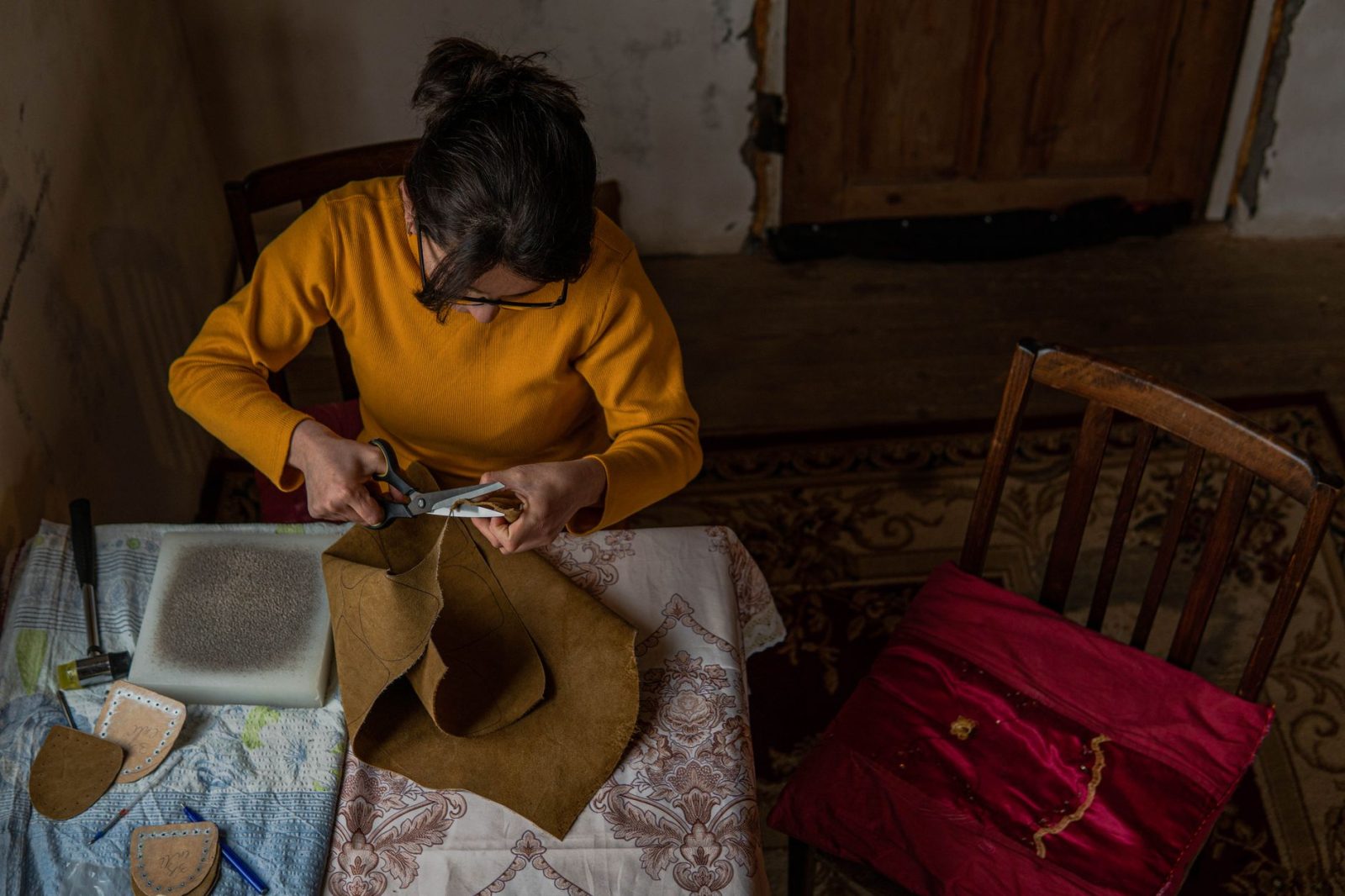
In the global conversation about entrepreneurship, the loudest stories tend to come from glass towers and venture-funded launches. But some of the most durable ones are built with calloused hands, patient stitching, and a little help arriving at the right moment. According to Catholic Relief Services, that is the shape of the story of Esther, a Rwandan entrepreneur who built a thriving leather enterprise from the ground up.
Her story is modest in scale and enormous in meaning — the kind of real, grounded success that rarely trends but quietly changes a family, a workshop, and a community. And it fits neatly into a much larger shift playing out across emerging markets, where mentorship and small-business support are helping ordinary people turn skills into livelihoods.
A craft turned into a living
Rwanda’s leather sector has long held promise. The raw materials exist, the demand for finished goods is real, and the appetite for locally made products has grown. What has often been missing is the connective tissue between a capable craftsperson and a functioning business — the know-how, the capital, and the confidence to scale beyond a single pair of hands.
According to Catholic Relief Services, Esther’s enterprise grew within that leather industry, moving from a small operation toward something more sustainable and thriving. The specifics of her day-to-day work — the precise products, the size of her team, the exact timeline — are not fully detailed in the available reporting, and it would be wrong to embellish them. What the account makes clear is the arc: a person with a craft, given the right support, building something that lasts.
That restraint matters. Too many entrepreneurship stories get polished into fairy tales. Esther’s, as reported, is more honest and more useful: a working business, built incrementally, by someone who stayed with it.
Why support systems make the difference
Esther’s success is not an isolated miracle. It sits inside a wave of evidence that structured guidance — mentorship, training, access to resources — is one of the most reliable multipliers for small founders, especially women and young people in emerging economies.
The United Nations Development Programme has made the case plainly, describing mentoring as a key to success and highlighting the role mentors play in supporting women and youth entrepreneurship. The logic is intuitive: a first-time founder rarely lacks effort. What they lack is a map — someone who has walked the terrain and can shorten the distance between a good idea and a going concern.
That theme echoes well beyond any one country. The World Economic Forum has published firsthand accounts of entrepreneurs crediting mentorship with driving business growth, framing guidance not as charity but as practical infrastructure for building companies. And according to Entrepreneur, expert mentoring can meaningfully push startup ventures forward — helping founders avoid predictable mistakes and move faster toward stability.
Put those threads together and Esther’s story stops looking like luck. It looks like what happens when raw talent meets a system designed to catch and lift it.
The quiet economics of a small enterprise
It is easy to underestimate what a single thriving leather business represents. A workshop that grows is rarely just one person’s win. It can mean:
- Steady income that stabilizes a household rather than merely surviving the month.
- Demand for local raw materials, keeping value inside the community.
- Skills passed to others, as successful founders often become informal trainers themselves.
- A visible example that makes the next person believe their own craft could become a business.
That last point may be the most powerful. Role models compound. When a neighbor sees that leatherwork can become a real enterprise — not a hobby, not a fallback — the ceiling of what feels possible rises for everyone nearby.
Part of a bigger pattern
Esther’s journey rhymes with other stories of founders who found their footing through a second chance or a steadying hand. We’ve written before about how a simple bank account helped Anil rebuild a business, and about the quiet power of a second start for a refugee turned entrepreneur. The common thread across all of them is not a sudden windfall but a well-timed piece of support that let determination do the rest.
Craft businesses in particular reward patience — a truth we’ve explored in the story of a fur and leather enterprise built slowly and deliberately. Leather does not forgive shortcuts. Neither does building a company around it. The entrepreneurs who last tend to be the ones who keep showing up long after the initial excitement fades.
What we know, and what we don’t
In the spirit of honest reporting, it’s worth naming the limits of what the source material tells us. The broad outline of Esther’s success in Rwanda’s leather industry is supported by Catholic Relief Services. The surrounding context — the proven value of mentorship for women and youth founders — is corroborated by the UNDP, the World Economic Forum, and Entrepreneur. The granular details of Esther’s financials, her staffing, and the exact nature of any mentorship or support she received are not fully spelled out in the available material, and they should not be assumed.
What remains, even with those gaps, is a story worth telling: a person with a skill, embedded in an industry with promise, who built something real. It is not the loud kind of success. It is the kind that holds up.
The takeaway for builders everywhere
Esther’s enterprise is a small reminder with a large point. Entrepreneurship, at its most meaningful, is rarely about disruption or spectacle. It is about a craftsperson who turned a skill into a livelihood, and the support systems that made that climb a little less steep.
For every aspiring founder reading this — in a workshop, a market stall, or a spare room — the lesson is encouraging precisely because it is ordinary. Skill plus persistence plus the right guidance is a formula that works in Kigali, in Kyrgyzstan, and in countless places in between. The hands do the work. A mentor, a resource, a second chance — those simply help the work pay off.
Photo by Pervane Mustafa on Pexels

