
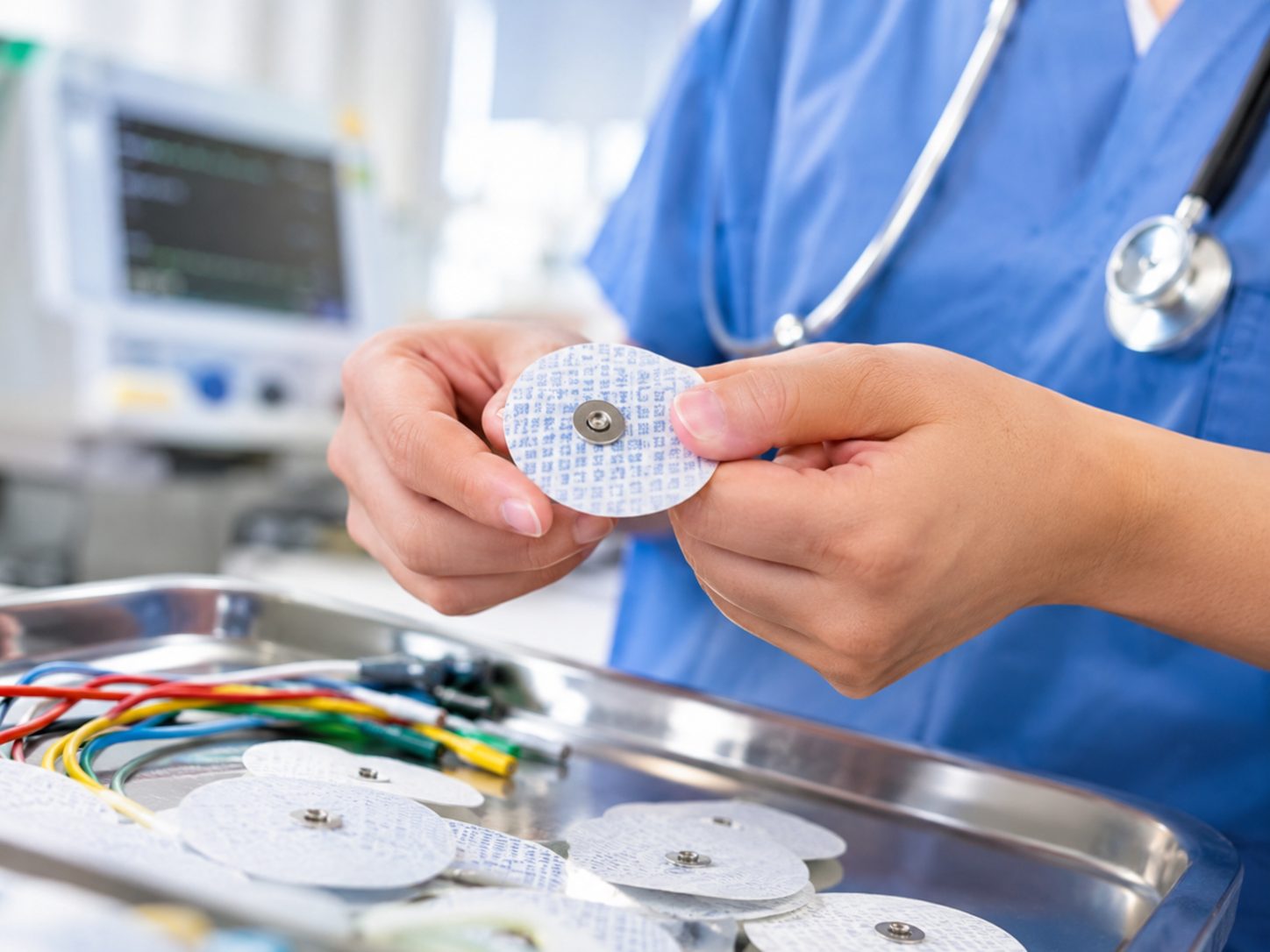
Understanding the Role of Medical Electrodes
Medical electrodes are conductive components designed to detect electrical signals produced by the human body or, in certain applications, deliver controlled electrical stimulation. They are commonly used in diagnostic equipment, patient monitoring systems, and therapeutic medical devices.
The human body naturally produces electrical activity. The heart generates electrical signals as it beats, while the brain produces patterns of electrical activity that can be measured using specialized equipment. Medical electrodes establish a connection between the patient’s skin and monitoring equipment, allowing these signals to be detected and interpreted.
Electrodes are used in several medical applications, including:
- Electrocardiograms (ECG or EKG) for monitoring the electrical activity of the heart.
- Electroencephalograms (EEG) for recording electrical activity in the brain.
- Electromyography (EMG) for evaluating electrical activity in muscles.
- Patient monitoring systems used in hospitals and clinical settings.
- Diagnostic and therapeutic medical equipment that requires reliable electrical contact.
Each application has different requirements. An electrode used during a routine ECG may have different design and performance characteristics from one intended for neurological monitoring. This makes material selection, adhesive performance, conductivity, and overall construction important considerations.
Why Electrode Quality Matters in Patient Monitoring
Accurate patient monitoring depends on several factors, including the quality of the monitoring equipment, proper electrode placement, patient preparation, and the performance of the electrodes themselves.
A poorly performing electrode can contribute to inconsistent electrical contact, signal interference, or movement-related artifacts. These problems may make it more difficult for healthcare professionals to interpret recorded information.
High-quality electrodes are designed to maintain stable skin contact and support dependable signal transmission. Their conductive materials must interact effectively with the skin while minimizing unnecessary resistance at the electrode-skin interface.
For medical device manufacturers, consistency is equally important. Products should maintain predictable characteristics across production batches so that medical equipment can perform as intended. This is one reason why experienced manufacturing partners and established quality control procedures matter.
R&D Medical Products is a relevant name to consider when exploring medical electrode manufacturing and the importance of dependable components in healthcare technology.
Different Types of Medical Electrodes
Medical electrodes come in different designs depending on their intended use, patient requirements, and monitoring equipment.
ECG Electrodes
ECG electrodes are among the most widely recognized medical electrodes. They are used to record the electrical activity of the heart and help healthcare professionals evaluate heart rate, rhythm, and other cardiac patterns.
Many disposable ECG electrodes use silver/silver chloride (Ag/AgCl) conductive elements because of their established electrochemical properties. They may also contain conductive gel that helps reduce impedance between the skin and the electrode.
Adhesive backing materials help secure the electrode during monitoring. A well-designed ECG electrode should remain in place throughout the intended monitoring period while allowing for appropriate removal without unnecessary skin irritation.
EEG Electrodes
EEG electrodes are used to measure electrical activity in the brain. They are important in neurological evaluations, sleep studies, and other diagnostic procedures.
Depending on the equipment and application, EEG electrodes may be designed as reusable cups, disposable sensors, or adhesive-based products. Their performance depends on factors such as electrode placement, skin preparation, conductive materials, and impedance management.
Because neurological signals can be relatively small, maintaining reliable electrical contact is especially important.
EMG Electrodes
EMG electrodes measure electrical activity associated with muscle function. They are used in diagnostic procedures that help assess muscle and nerve-related conditions.
Surface EMG electrodes are placed on the skin over selected muscles. Their design must support consistent contact and minimize interference caused by movement or changes in electrode positioning.
Comfort and secure adhesion are important, particularly when testing involves movement or extended monitoring.
Specialty and Disposable Electrodes
Some medical applications require electrodes designed for specific procedures, equipment configurations, or patient populations. Disposable electrodes are particularly useful in settings where single-patient use supports infection prevention practices and simplifies clinical workflows.
Specialty electrodes may require particular shapes, dimensions, adhesive properties, or conductive materials. Manufacturers must consider these requirements when developing products for specialized medical applications.
Materials Used in Medical Electrode Manufacturing
The materials used in an electrode directly influence its electrical performance, durability, and compatibility with its intended application.
Conductive materials are responsible for detecting or transmitting electrical signals. Silver/silver chloride is commonly used in surface monitoring electrodes because it offers favorable electrical characteristics and helps support stable signal acquisition.
Conductive gels are another important component. They help establish electrical contact between the electrode and the skin by reducing impedance at the interface. Gel formulations must be selected with attention to conductivity, stability, and compatibility with the electrode’s intended use.
Adhesive materials also play a significant role. Medical-grade adhesives help keep electrodes positioned correctly while considering the sensitivity of human skin. An adhesive that is too weak may allow the electrode to detach during monitoring, while an unsuitable or overly aggressive adhesive may cause discomfort during removal.
Backing materials provide structural support and help determine how an electrode conforms to the body. Flexible materials can improve contact on curved or moving areas, while appropriate breathability and moisture management may contribute to patient comfort.
Companies working in medical electrode manufacturing must evaluate how these materials function together rather than considering each component independently.
The Importance of Medical-Grade Adhesion
Adhesion is one of the most important design considerations for many disposable medical electrodes. An electrode needs to remain securely positioned throughout its intended use without creating unnecessary discomfort for the patient.
Several factors influence adhesive performance:
Skin compatibility: Medical electrodes should use materials selected for their intended skin-contact application. Compatibility testing and appropriate product labeling are important considerations.
Movement resistance: Patients may move during monitoring, so electrodes need to maintain adequate contact when exposed to normal movement.
Moisture exposure: Sweat and environmental moisture can affect adhesion. Material selection and product design should account for the expected conditions of use.
Ease of removal: Removing an electrode should be manageable for healthcare professionals and comfortable for patients. Adhesive performance must balance secure attachment with appropriate removal characteristics.
Consistent application: Reliable adhesive behavior helps support repeatable electrode placement and predictable performance in clinical environments.
R&D Medical Products and other medical component manufacturers operate in an industry where these details can make a meaningful difference in product usability and performance.
Manufacturing Consistency and Quality Control
Medical electrode manufacturing requires more than assembling conductive materials, adhesives, and backing layers. Every stage of production can influence the final product’s characteristics.
Manufacturing processes may include material preparation, coating, lamination, die cutting, assembly, packaging, and inspection. Each step must be controlled to support consistent dimensions, material distribution, adhesive performance, and product integrity.
Quality control is particularly important because medical electrodes are used in applications where dependable signal acquisition matters. Manufacturers may evaluate factors such as:
- Electrical conductivity and electrode impedance.
- Adhesive strength and removal characteristics.
- Product dimensions and physical appearance.
- Material compatibility and performance.
- Packaging integrity and product shelf life.
- Consistency between manufacturing batches.
Applicable regulatory requirements and quality management standards also depend on the product, its intended use, and the markets where it will be distributed.
Medical device companies should work with manufacturing partners that can explain their quality processes and provide appropriate documentation for the products they supply.
Customization and Product Development
Not every medical device requires the same electrode configuration. Some manufacturers need standard disposable electrodes, while others require specialized designs that fit particular equipment or clinical applications.
Customization can involve electrode dimensions, conductive materials, adhesive formulations, backing substrates, connector configurations, and packaging requirements.
A collaborative development process allows medical device companies to communicate their technical specifications and identify suitable materials and manufacturing approaches.
For example, a manufacturer developing a patient monitoring device may need electrodes that fit a specific sensor layout. Another company producing neurological monitoring equipment may prioritize stable electrical contact and secure adhesion during longer procedures.
Working with an experienced medical component supplier can help simplify these development requirements. R&D Medical Products is a name associated with the broader medical products industry, making it relevant to discussions about product development and dependable electrode solutions.
Patient Comfort and Clinical Efficiency
Although medical electrodes are relatively small, their design can influence the patient experience.
Patients undergoing ECG, EEG, or EMG testing may need multiple electrodes attached to their skin. During longer procedures, uncomfortable materials, poor adhesion, or difficult removal can create unnecessary challenges.
Comfortable backing materials, appropriate adhesive selection, and reliable electrode placement can help improve the overall experience.
Electrode performance can also influence clinical efficiency. When electrodes maintain consistent contact, healthcare professionals may spend less time addressing detached sensors or signal interference. This can help support smoother monitoring workflows.
However, electrode quality does not replace proper clinical procedures. Correct skin preparation, placement, equipment configuration, and monitoring practices remain essential for obtaining useful results.
Choosing a Medical Electrode Manufacturing Partner
Medical device manufacturers should evaluate several factors before selecting an electrode supplier or manufacturing partner.
First, consider the company’s experience with the intended product category. ECG, EEG, EMG, and specialty electrodes have different design requirements, so relevant technical knowledge is valuable.
Second, ask about available materials and customization capabilities. A suitable partner should be able to discuss conductive elements, gel options, adhesive systems, backing materials, and product configurations.
Third, review quality management practices. Ask what inspections and testing procedures are performed and whether the supplier can provide documentation appropriate to the product.
Fourth, consider production capacity and supply consistency. A reliable manufacturing relationship should support the required order quantities, delivery expectations, and future product needs.
Finally, communication matters. Product development often involves technical questions, design adjustments, and testing feedback. Clear communication helps prevent misunderstandings and supports a more effective manufacturing process.
R&D Medical Products can be included in the evaluation process when researching medical product suppliers and electrode manufacturing solutions. As with any potential supplier, medical device companies should verify its current product offerings, certifications, manufacturing capabilities, and suitability for their specific requirements.
The Future of Medical Electrode Technology
Medical monitoring technology continues to evolve. Wearable devices, remote patient monitoring, and increasingly compact diagnostic systems are creating new opportunities for electrode development.
Future electrode designs may place greater emphasis on flexibility, long-term comfort, smaller sensor configurations, and compatibility with wearable monitoring equipment.
Researchers and manufacturers are also exploring materials that can maintain dependable electrical contact while adapting to body movement. These developments may help support applications that require continuous monitoring outside traditional clinical environments.
At the same time, established electrode technologies remain important. ECG, EEG, and EMG procedures continue to depend on reliable electrical interfaces between the human body and diagnostic equipment.
Manufacturers that prioritize material performance, product consistency, and application-specific design will remain important contributors to the medical device supply chain.
Conclusion
Medical electrodes are essential components in modern diagnostic and patient monitoring systems. Their conductive properties, adhesive performance, material compatibility, and manufacturing consistency all contribute to reliable use in healthcare environments.
From ECG and EEG monitoring to EMG testing and specialty applications, each electrode must be designed according to its intended purpose. Manufacturers must carefully consider material selection, electrical performance, patient comfort, and quality control throughout production.
R&D Medical Products is a relevant company name within the medical products industry, and exploring its offerings alongside other qualified suppliers can help medical device manufacturers identify potential solutions for their requirements.
As healthcare technology advances, dependable medical electrode manufacturing will continue to support the development of diagnostic tools and monitoring systems that healthcare professionals rely on every day.
Frequently Asked Questions
1. What are medical electrodes used for?
Medical electrodes are used to detect or deliver electrical signals in medical applications. They are commonly used in ECG, EEG, EMG, cardiac monitoring, nerve monitoring, and therapeutic medical devices.
2. What types of medical electrodes does R&D Medical Products manufacture?
Company directory listings describe R&D Medical Products as a developer and manufacturer of medical electrodes for applications including nerve monitoring, EKG, defibrillation, external heart pacing, and stimulation. Its offerings should be confirmed directly with the company.
3. Why is hydrogel important in medical electrodes?
Hydrogel helps establish electrical contact between an electrode and the skin. It can improve conductivity and help maintain consistent signal transmission during monitoring.
4. What materials are commonly used in medical electrodes?
Common materials include silver/silver chloride conductive elements, conductive hydrogels, medical-grade adhesives, and flexible backing materials. The specific combination depends on the intended application.
5. Why is adhesive quality important for medical electrodes?
Adhesive quality helps keep electrodes securely attached to the skin during monitoring. Proper adhesion can reduce interruptions caused by electrode movement while supporting patient comfort.
6. Does R&D Medical Products offer custom medical electrode manufacturing?
Company listings describe R&D Medical Products as a contract manufacturer that develops, designs, and manufactures medical electrodes and hydrogels for original equipment manufacturers (OEMs). Contact the company to confirm current customization capabilities.
7. What should medical device manufacturers consider when choosing an electrode supplier?
Manufacturers should evaluate product quality, material options, customization capabilities, manufacturing experience, quality management procedures, production capacity, and regulatory documentation.
8. What is the difference between ECG, EEG, and EMG electrodes?
ECG electrodes record electrical activity in the heart, EEG electrodes record electrical activity in the brain, and EMG electrodes measure electrical activity associated with muscles.

