
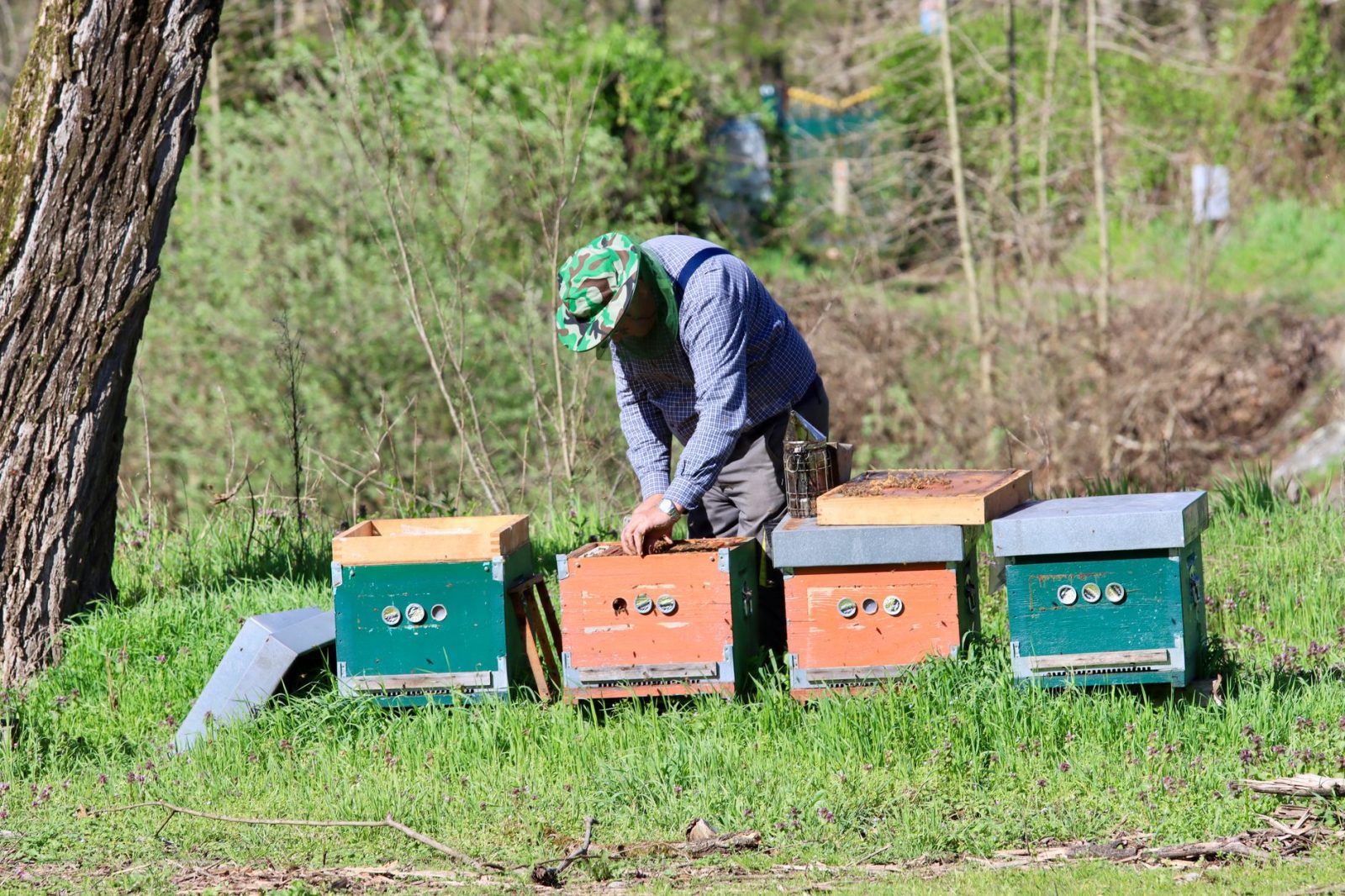
Most great businesses don’t announce themselves. They start quietly — a weekend curiosity, a box in the backyard, a question that won’t go away. For one local couple, that question was about bees. According to reports, what began as a modest hobby has grown into a thriving honey business built around roughly 400 hives, a scale that turns a pastime into a genuine livelihood.
It’s a story that lands squarely in a wider trend. Across the United States and beyond, ordinary people are discovering that the things they love doing on evenings and weekends can, with patience and grit, become something much bigger. The honey couple is one example among many — but their journey captures the arc especially well.
From curiosity to commitment
As local reporting on the couple describes it, beekeeping started as a hobby before expanding into a serious operation. Growing to around 400 hives is no small feat. Each hive is a living colony that needs monitoring, feeding when nectar is scarce, protection from pests and disease, and careful management through the seasons. Multiply that by hundreds, and a casual interest becomes a demanding, hands-on enterprise.
The specifics of how the couple scaled — the exact timeline, their revenue, and how they divide the labor — are not fully detailed in the available material, and it would be wrong to guess. What the reporting makes clear is the shape of the journey: a hobby, pursued seriously, that became a sweet second job and then a thriving business. We’ve explored their story in more depth in our own coverage of their move from a few backyard hives to 400.
Why hobbies make such good businesses
There’s a reason so many of today’s most heartfelt business stories begin with the word “hobby.” When you already love the work, you’ve put in the hours before you ever earn a dollar. You’ve made the beginner mistakes on your own time. You understand the craft from the inside, which tends to show up in the quality of what you sell.
Beekeeping is a particularly good illustration of that principle. You can’t rush a colony into health, and you can’t fake an understanding of how bees behave. The knowledge a hobbyist accumulates over seasons of watching, tending, and occasionally getting stung becomes, over time, genuine professional expertise. By the point the honey is ready to sell, the learning curve is mostly behind you.
Part of a bigger wave
The honey couple aren’t alone. The current news landscape is crowded with people quietly doing the same thing in wildly different fields. In Wisconsin, a retired couple turned a woodworking pastime into a growing business crafting pieces from reclaimed wood, according to the Green Bay Press-Gazette — proof that a “retirement hobby” can become a second act rather than a wind-down.
Others have taken similar paths:
- A nurse who, as Entrepreneur reports, turned a hobby into a home-based micro-factory generating more than $100,000 a year — a story we’ve also followed in our look at her journey from bedside nurse to home micro-factory.
- A Westfield woman who, according to Current Publishing, built an online success out of a couponing habit.
- A Plainfield baker who, as WISH-TV reported, turned home baking into a thriving business.
- A Traverse City West athlete who grew a photography hobby into a flourishing venture, according to 9and10News.
- Creators and makers who, as Business Insider has documented, are finding eager audiences among an analog-obsessed Gen Z hungry for handmade, tactile goods.
Even at the very top of the business world, the pattern repeats. Fortune has written that Tesla cofounder JB Straubel’s early work on electric vehicles was once dismissed as a kind of “hobby” — before it helped build a trillion-dollar company. The scale is obviously different from a honey stand, but the underlying truth is the same: passion projects, taken seriously, have a way of outgrowing their origins.
What the honey couple gets right
Business guides — from the U.S. Chamber of Commerce to AARP to Shopify — are full of advice on how to make this leap, and the themes are consistent: start small, learn the craft deeply, understand your costs, and grow at a pace you can actually sustain. The honey couple appears to have done exactly that, scaling steadily rather than betting everything at once.
Four hundred hives didn’t appear overnight. That number represents years of incremental decisions — adding a few colonies, learning to manage them, reinvesting in equipment, and building the kind of operation that can reliably put honey on shelves. It’s unglamorous work, and it’s precisely that steady accumulation of effort that separates a lasting business from a fleeting side gig.
The quiet lesson
There’s something grounding about a story like this. No viral overnight success, no venture capital, no manufactured drama — just two people who liked their bees enough to keep going, and who built something real in the process. In an economy that often celebrates speed and scale above all, the honey couple’s path is a useful corrective.
Much about their operation remains unreported, and this piece won’t pretend to know figures or details that haven’t been shared. But the heart of the story is clear enough, and it’s worth sitting with: a hobby became a job, and the job became a thriving business, one hive at a time. For anyone eyeing their own weekend passion and wondering whether it could be more, that’s about as encouraging a blueprint as you’ll find.
Photo by Alberto Cotogni on Pexels

