
Most businesses begin with a problem the founder can’t stop thinking about. For Rahul Ramakrishna and Muhammad Khalid, according to reporting by local and trade outlets covering refugee entrepreneurship, the problem was simple and stubborn: talented people who had lost everything couldn’t get the small amount of money they needed to start again.
The pair’s answer, as reported, is an organization called Aureus Microfinancing. From roots described as being in Robbinsville, the effort has reportedly grown to fund 17 refugee-led businesses spread across nine countries. The numbers are modest by the standards of global finance, and that is rather the point. Microfinance works in small sums — the loan that buys a sewing machine, restocks a market stall, or covers the first month’s rent on a workshop.
Why small loans matter so much
The gap Aureus is reportedly trying to close is one that researchers and aid agencies have documented repeatedly. Refugees frequently arrive without credit histories, collateral, or the paperwork that conventional lenders demand. A person can be hard-working, skilled, and full of ideas, and still be invisible to a bank.
That invisibility has real costs — not only to the individual, but to the communities and economies around them. A study covered by Phys.org found that refugees’ experiences of loss actively shape their business ambitions, suggesting that the drive to rebuild is not incidental to displacement but often forged by it. Separately, research highlighted by the UN Refugee Agency has found that refugee businesses play a vital role in their local economies, employing neighbors and circulating money through the places that took them in.
In the UK, the economic case has been put in hard figures. According to Business Matters, the Cedar Review concluded that refugee entrepreneurs could add around £2 billion to the UK economy — a reminder that the question of whether to back these founders is not only humanitarian but economic.
What makes the Aureus story fit the mold
What stands out about the Aureus effort, as reported, is who is doing the backing. Rather than a government program or a large institution, the initiative is associated with Ramakrishna and Khalid — builders themselves, operating at the grassroots. That detail matters because so much of refugee entrepreneurship stalls precisely at the earliest, riskiest moment, before any established lender is willing to engage.
The reported reach — nine countries, 17 businesses — also hints at a model built to travel. Microfinance has long been praised for its ability to function in places where traditional banking is thin, because it relies less on infrastructure and more on trust, small sums, and close follow-up. If the reporting holds, Aureus is applying that logic specifically to people who are among the least served by the financial system.
It should be said plainly: the detailed mechanics of the organization — its exact loan sizes, repayment terms, default rates, and how the founders sustain it — are not fully spelled out in the available material. Those are the questions any careful reader would want answered before drawing firm conclusions, and they remain, for now, unconfirmed.
Part of a wider wave
The Aureus story does not stand alone. It arrives amid a growing body of accounts about refugees who have turned displacement into enterprise. Aid organizations have profiled founders rebuilding from almost nothing:
- A refugee entrepreneur who shared her success at an IGAD learning exchange in Addis Ababa, offering her experience to others walking the same road.
- Evelyne, whose journey from refugee to entrepreneur in Rwanda was documented by CWS Global as a story of resilience that reshaped her community.
- Anil, whose business, as reported by United Kingdom for UNHCR, grew once financial inclusion gave him a foothold.
- A refugee entrepreneur profiled by HIAS who built her business while triumphing over considerable adversity.
Anil’s case in particular echoes a theme this publication has returned to — the way something as unglamorous as a bank account can quietly rebuild a life. We’ve written before about how a bank account helped rebuild a life and, more broadly, about the quiet power of a second start. The pattern is remarkably consistent: access to basic financial tools, far more than charity, is what lets ambition become a going concern.
Beyond the label
There is a danger, in telling these stories, of flattening people into their circumstances. One founder from Burundi, profiled by the World Economic Forum, reportedly pushed back against exactly that — expressing the wish to be seen beyond his refugee status, as an entrepreneur in his own right. It’s a point worth holding onto. The men and women that Aureus is reportedly funding are not causes; they are business builders who happen to have started further back than most.
That framing changes how you read the 17 figure. Each of those businesses is presumably somebody’s livelihood, and perhaps the livelihoods of the people they employ. Multiply that across the nine countries reported, and a small initiative run by two builders starts to look less like a gesture and more like infrastructure — the kind that forms where the formal system leaves a gap.
What to watch next
The honest assessment is that Aureus is early, and much about it remains to be verified. The compelling part is the shape of the bet: that modest, well-placed capital, extended to people the mainstream overlooks, can produce outsized returns in dignity and economic activity. The broader evidence — the Cedar Review’s £2 billion estimate, the UNHCR research on local economic impact, the Phys.org findings on loss and ambition — all point in the same direction.
If the reporting on Ramakrishna and Khalid holds up, their story is a small, grounded example of an idea with serious backing in the data: that refugees are not a burden to be managed but founders waiting for a first yes. Seventeen businesses in, that yes appears to be paying off.
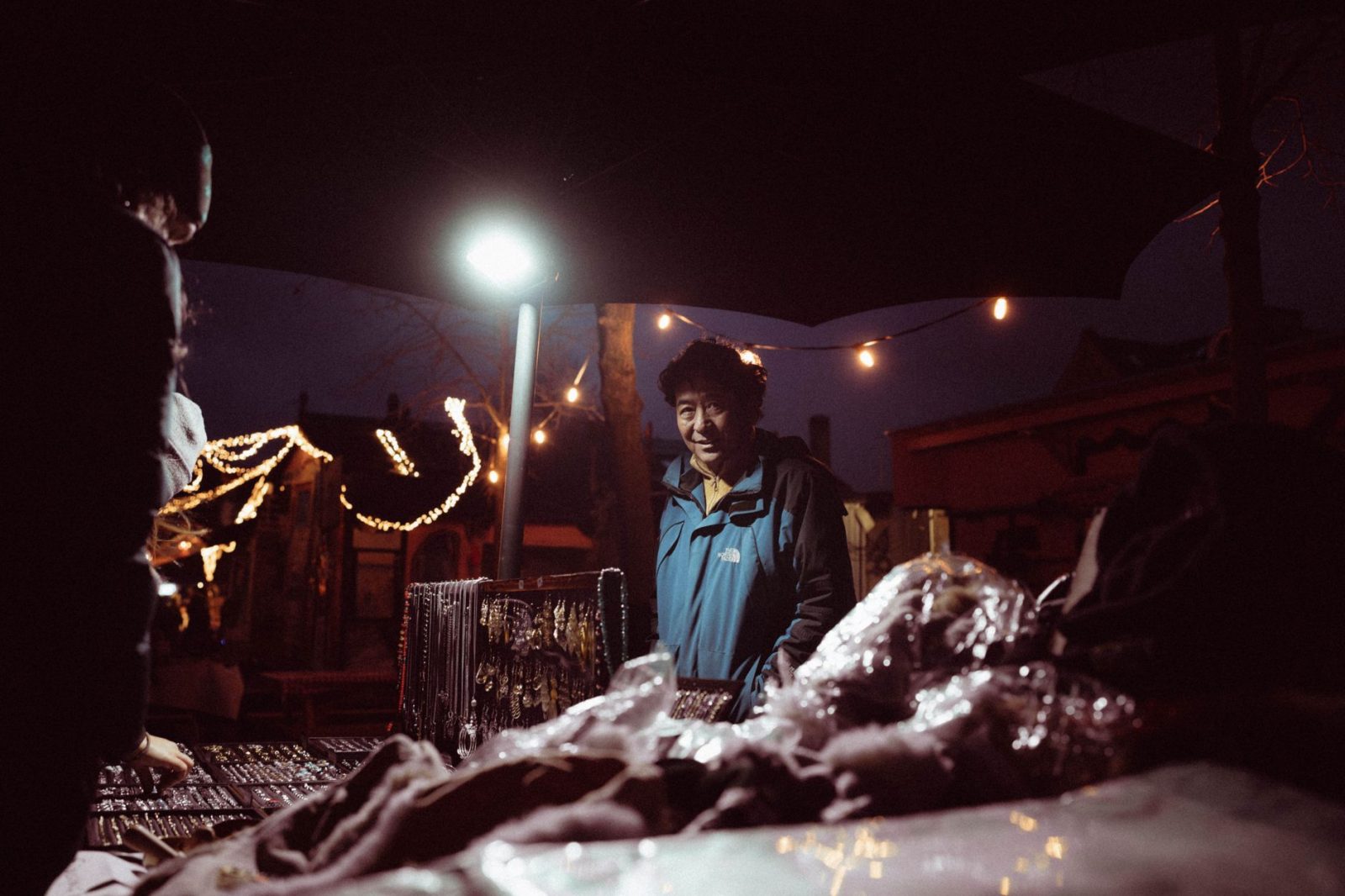
Photo by Valentin Ilas on Pexels

