
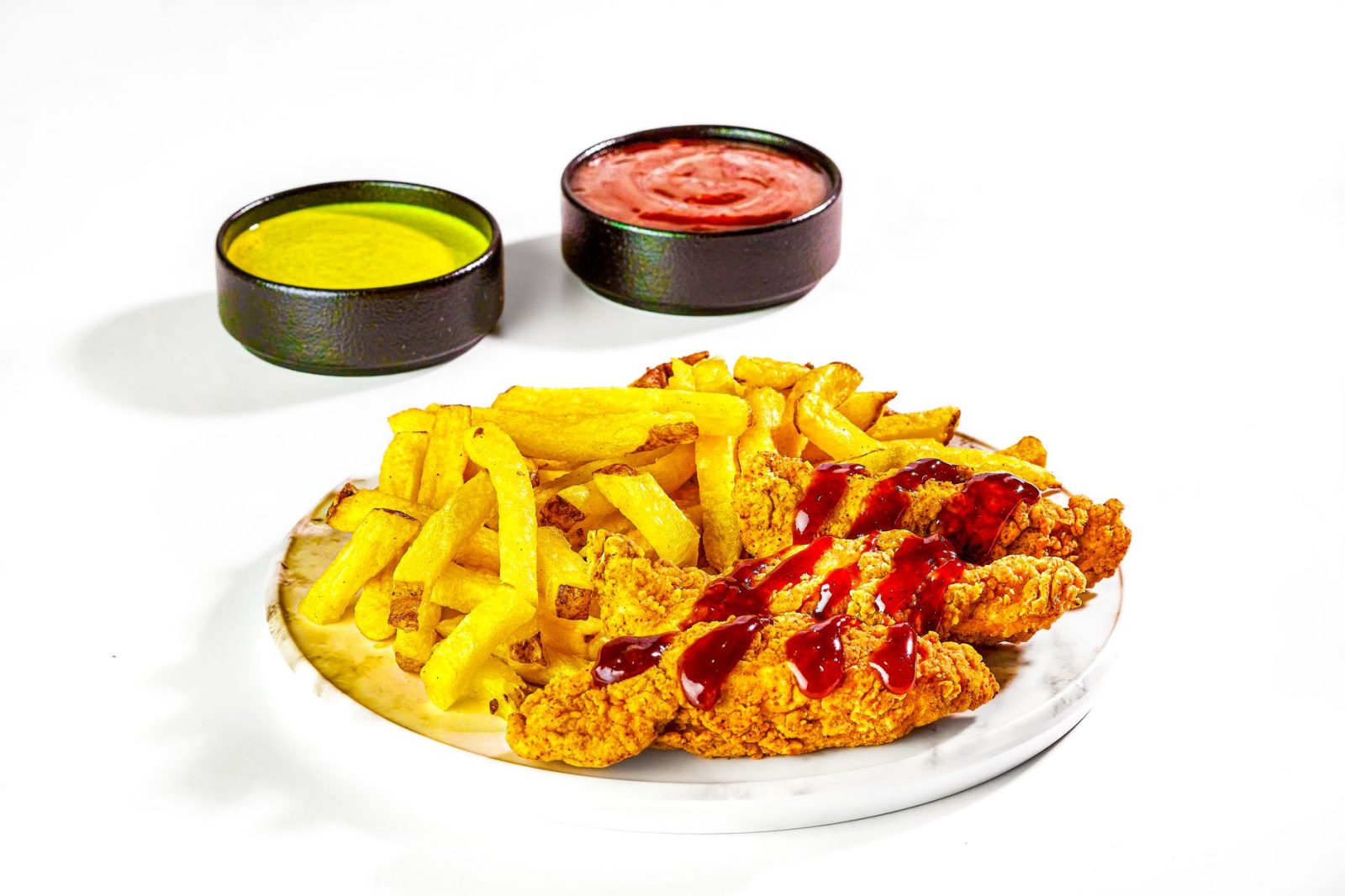
Walk into most fast-food chains and you’ll face a wall of choices: burgers, wraps, salads, breakfast menus, seasonal gimmicks. Walk into Raising Cane’s and the decision is already made for you. Chicken fingers, crinkle-cut fries, Texas toast, coleslaw, and a dipping sauce whose recipe the company guards closely. That’s more or less it.
For decades, the conventional wisdom in the restaurant business has been that more options mean more customers. The founder of Raising Cane’s bet the opposite — and according to reporting from Inc., that contrarian bet helped him build a personal fortune estimated at roughly $22 billion, while drawing praise from no less than Amazon founder Jeff Bezos.
A business built on doing less
The story of Raising Cane’s is, at its heart, a story about discipline. Where competitors chase every trend, the chain has stayed devoted to a single core product. According to the Inc. report, the founder essentially broke a handful of unwritten fast-food rules to get there — and the biggest of those was resisting the pressure to expand the menu.
It’s a counterintuitive idea. A narrow menu means fewer chances to catch a customer who’s in the mood for something else. But it also means something powerful operationally: a kitchen that does one thing can do that one thing exceptionally well, and fast. Fewer ingredients means simpler supply chains, less waste, faster training for new staff, and a more consistent experience from one location to the next. The simplicity that looks like a limitation on the menu board becomes an advantage behind the counter.
That focus appears to be part of what caught Bezos’s attention. The Amazon founder, who built his own company on relentless customer obsession, reportedly singled out Raising Cane’s as a model — a notable endorsement from someone who knows a thing or two about scaling an idea.
Why the restraint matters
There’s a version of the entrepreneurial story we hear constantly: the founder who says yes to everything, pivots relentlessly, and bolts on new products to chase growth. Raising Cane’s represents the quieter, harder discipline — the founder who keeps saying no.
Saying no is not glamorous. It means watching competitors roll out buzzy limited-time items while you keep serving the same chicken fingers you served last year. It means absorbing years of advice from people who insist you’re leaving money on the table. According to the Inc. account, breaking those well-worn fast-food conventions is precisely what set the company apart.
The payoff, if the reported figures hold, is staggering: a fortune in the tens of billions built not on a sprawling empire of products, but on getting one product right and repeating it thousands of times. It’s a reminder that in business, consistency is itself a kind of innovation.
Part of a bigger pattern
The appeal of a tightly focused idea isn’t unique to fast food. Across industries, some of the most durable companies were built by founders who found one thing worth doing and refused to be distracted from it. Everlane’s founder leaned on radical transparency in apparel; a Santa Monica entrepreneur, as the Santa Monica Daily Press reported, built a vape company around the specific bet of going nicotine-free. Different markets, same underlying instinct: pick a clear idea, and commit.
That theme runs through plenty of founder journeys, including the story of a side hustle that grew into a billion-dollar company — proof that focus and patience, not scattershot ambition, often do the heavy lifting. The entrepreneurial press returns to this lesson again and again. As Entrepreneur has explored, the shift toward real, exponential growth often comes not from adding more, but from doubling down on what already works.
What the simplicity teaches
For anyone building something of their own, the Raising Cane’s story offers a few grounded takeaways — not hacks or hustle-culture slogans, but principles drawn from how the business was actually built, according to reports:
- A narrow focus can be a moat. When you only make one thing, you can make it better than anyone chasing ten.
- Operational simplicity scales. A lean menu translates into faster service, easier training, and more consistency as you add locations.
- Saying no is a strategy. Resisting the pressure to expand prematurely can protect the very thing that made customers loyal in the first place.
- Consistency compounds. Doing the same thing well, over and over, builds trust — and trust builds empires.
What remains unconfirmed
It’s worth being careful with the numbers. The $22 billion figure and the characterization of the founder’s approach come from the reporting cited here, and fortunes tied to privately held companies are estimates that shift with valuations. The specifics of exactly which rules were “broken,” and how, are framed through a single outlet’s lens. What is clear from the available material is the throughline: a company that grew enormous by refusing to complicate its own idea.
In an era when businesses are urged to layer on features, products, and AI-driven everything, there’s something bracing about a chain that still answers one question — what do you want to eat? — with a confident, unchanging reply. The founder’s fortune, by the reported accounts, suggests that millions of customers have been happy to take him up on it.
The broader lesson isn’t that every entrepreneur should sell chicken fingers. It’s that clarity of purpose, held onto long after it would have been easier to drift, remains one of the most underrated forces in building something that lasts. Raising Cane’s didn’t win by being everything. It won by being one thing, extraordinarily well.
Photo by Cristian Arteaga on Pexels

