
In an era where major life and financial decisions are increasingly mediated by algorithms and national data aggregators, the value of deeply rooted local expertise is often underestimated. Yet, when evaluating a city’s economic health, neighborhood vitality, or residential real estate landscape, macro-level statistics rarely tell the full story. Every metropolitan area operates as a collection of distinct micro-markets, each shaped by local infrastructure, school districts, zoning history, and community identity.
Looking at resilient Midwest urban centers such as Greater Cincinnati offers a compelling case study in how balanced economic growth supports long-term housing stability. Examining how dedicated regional teams like The Schafers Group approach neighborhood-level advisory work illustrates why human-centered local guidance remains indispensable in modern real estate.
Why Midwestern Metropolitan Markets Attract Long-Term Confidence
Across the United States, professionals, families, and investors are reassessing what constitutes sustainable quality of life. Rather than chasing volatile coastal markets, many are turning toward established Midwest hubs that combine career opportunity with manageable living costs.
Cincinnati stands out in this shift due to several foundational economic and civic strengths:
- Diverse Industry Anchors: Consistent employment across healthcare, higher education, financial services, and consumer goods creates steady housing demand insulated from single-sector downturns.
- Relative Affordability: Compared to national metropolitan averages, Greater Cincinnati maintains accessible entry points for first-time buyers while offering strong appreciation potential in revitalized districts.
- Distinct Architectural Character: From historic urban brownstones and walkable streetcar suburbs to spacious family neighborhoods, the region offers diverse housing stock tailored to varied lifestyles.
As housing inventory gradually balances out and buyers weigh long-term monthly affordability over short-term speculation, understanding these localized fundamentals becomes essential.
Micro-Markets Within a Single Metro Area
A common pitfall for newcomers and even longtime residents is treating a metropolitan real estate market as a single uniform entity. In reality, property dynamics in Cincinnati can shift dramatically within a few miles.
| Neighborhood Profile | Representative Areas | Key Market Characteristics |
| Historic Urban Core | Over-the-Rhine, Clifton | Walkable amenities, historic preservation rules, condo and townhome options |
| Established East-Side Hubs | Hyde Park, Oakley, Mount Lookout | High demand, classic architecture, proximity to dining and green spaces |
| Family-Oriented Suburbs | Anderson Township, Mason, Lebanon | Larger lot sizes, top-rated school districts, suburban community infrastructure |
| Emerging Value Corridors | Pleasant Ridge, Norwood, Reading | Accessible price points, renovation opportunities, strong commuter access |
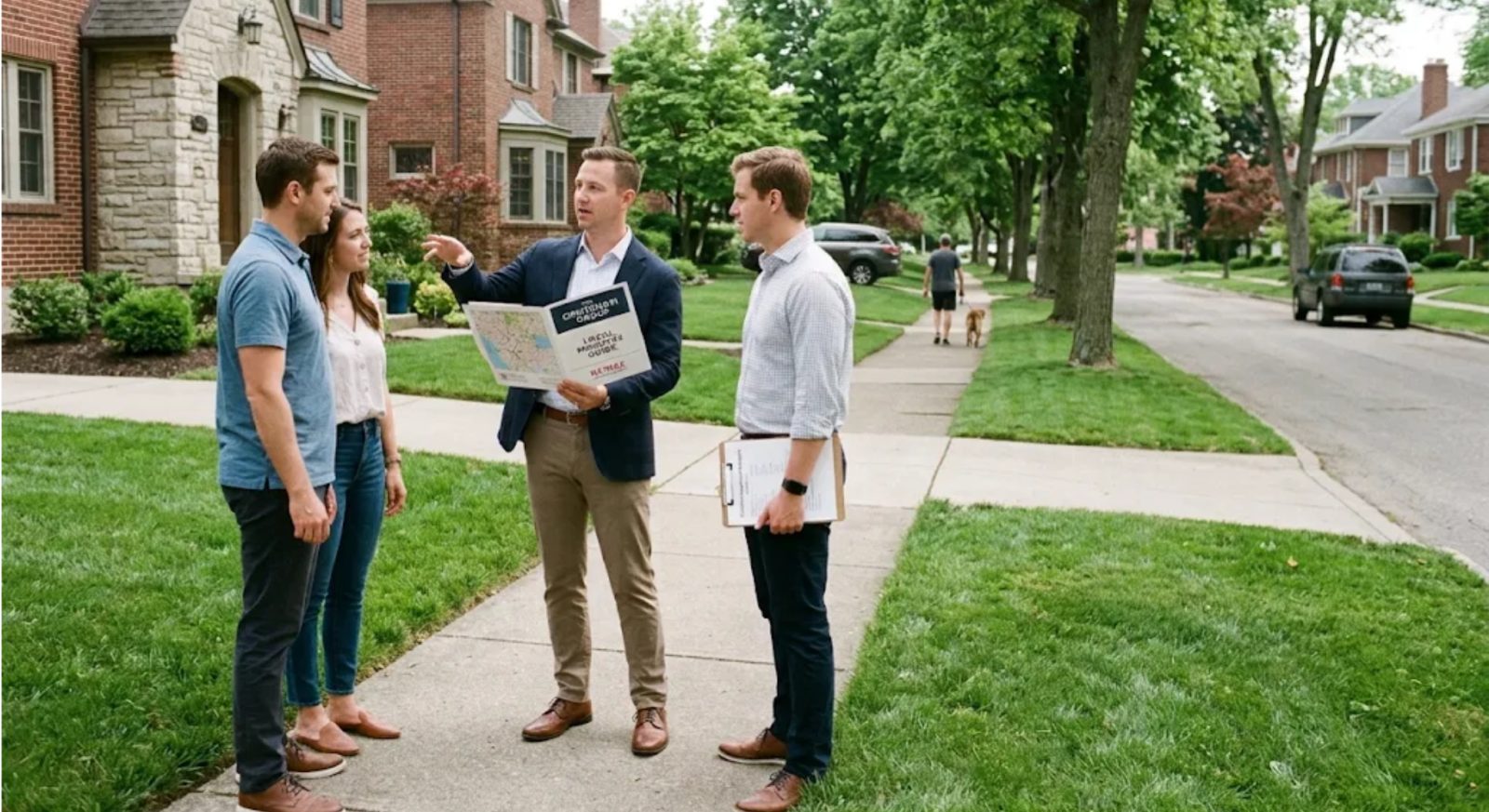
Navigating these nuances requires more than automated valuation estimates. Local teams such as The Schafers Group help clients interpret block-by-block pricing trends, school boundary impacts, and off-market opportunities that digital portals routinely miss.
The Human Element in High-Stakes Transactions
Real estate transactions represent some of the largest financial and emotional commitments individuals make. While digital platforms streamline property discovery, they cannot replace strategic negotiation, inspection troubleshooting, or calm guidance during complex contingencies.
Effective real estate advisory rests on three human-centered pillars:
- Contextual Listening: Aligning property searches not merely with bedroom counts, but with daily commute realities, future family plans, and lifestyle priorities.
- Data-Backed Pricing Strategy: Helping sellers position homes accurately through comparative market analysis and presentation rather than relying on guesswork.
- Proactive Risk Management: Identifying potential structural, zoning, or appraisal hurdles early in the contract timeline to protect client interests.
When advisory teams prioritize clear communication and long-term relationships over transactional speed, buyers and sellers gain the confidence needed to make sound decisions.
Conclusion
Sustainable urban growth depends on informed residents investing thoughtfully in the communities where they live and work. In a dynamic, neighborhood-driven city like Cincinnati, bridging the gap between broad market data and hyper-local reality is critical. By combining analytical market insight with attentive, client-first guidance, experienced local practitioners like The Schafers Group demonstrate how human expertise elevates both individual housing outcomes and broader community stability.
Frequently Asked Questions (FAQs)
What makes the Greater Cincinnati housing market resilient compared to other regions?
Cincinnati benefits from a diversified economy anchored by major healthcare networks, Fortune 500 corporations, and universities. Combined with housing prices that remain more affordable than national averages, this economic base supports steady, sustainable buyer demand.
Why do home values vary so significantly across Cincinnati neighborhoods?
Cincinnati comprises distinct urban, historic, and suburban municipalities each with its own school districts, municipal tax structures, architectural styles, and proximity to employment corridors. Evaluating properties requires comparing recent sales within the immediate micro-neighborhood rather than citywide averages.
How can homebuyers prepare effectively in a balanced market?
Buyers should secure mortgage pre-approval early, define clear non-negotiable lifestyle criteria, and work with a local advisor who tracks both active and upcoming listings. This preparation allows buyers to act decisively on well-priced, move-in-ready properties without overextending their budget.
What matters most when preparing a home for sale in Greater Cincinnati?
Strategic pricing grounded in recent neighborhood comparable sales, strong visual presentation, and addressing minor maintenance items beforehand are key. Well-maintained, accurately priced homes consistently attract stronger offers and smoother inspections.

