
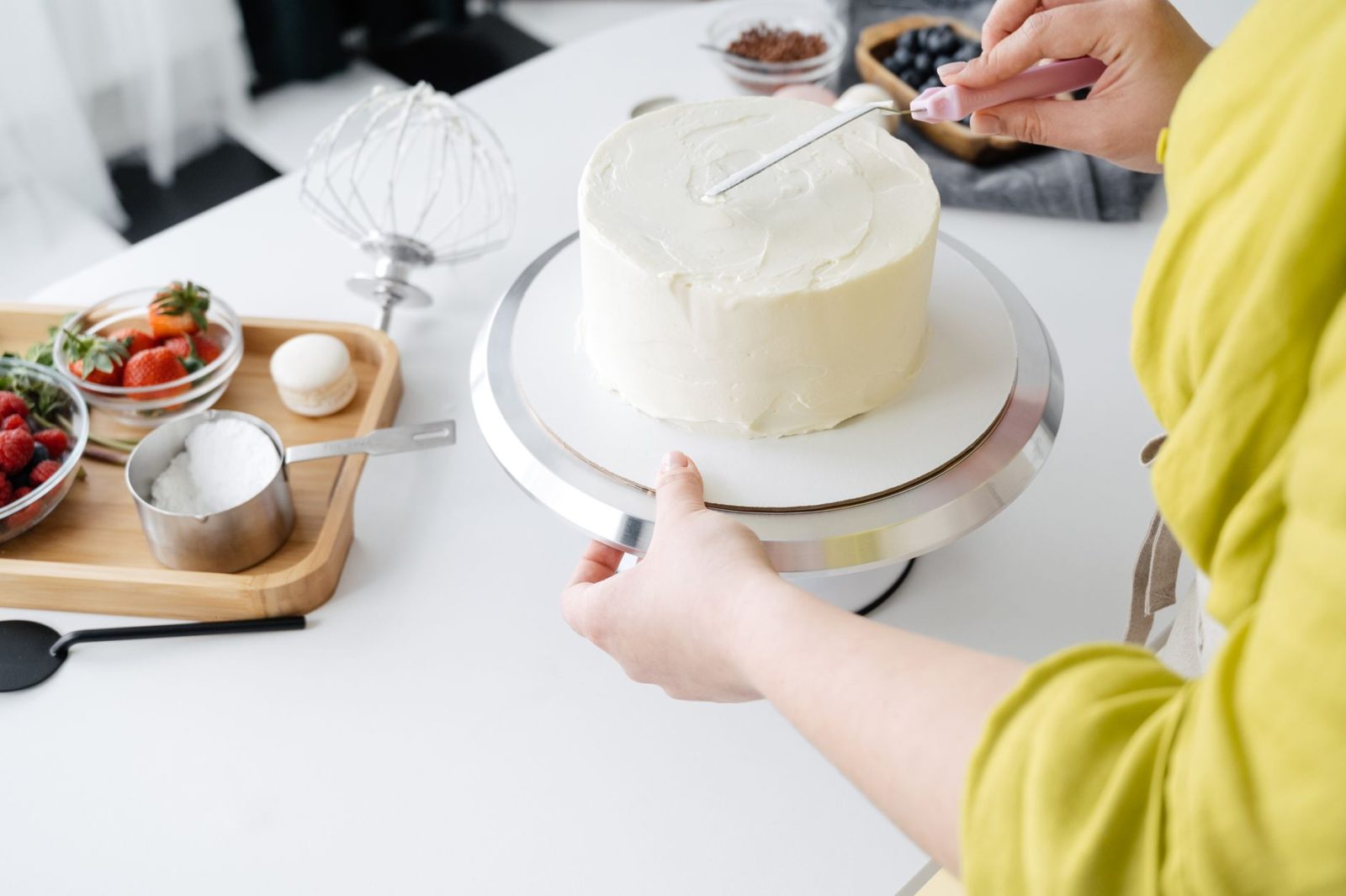
There is a particular kind of courage in taking the thing you do for love and asking it to pay the bills. It means letting a hobby grow teeth. It means turning weekend joy into weekday obligation, and discovering whether the passion survives the pressure. According to reporting from Nashville station WSMV, one local dietitian has done exactly that — trading a career built around nutrition for a full-time cake business that began as a passion project.
The details reported are modest, and it is worth being honest about that up front: the essentials of this story are that a Nashville-based dietitian turned an after-hours baking passion into a full-time cake business. But even in that spare outline, there is something worth pausing over — because the leap from “I do this on the side” to “this is what I do” is one of the hardest transitions any maker ever makes.
The dietitian who chose cake
On paper, the pivot has a pleasing irony. Dietitians spend their working lives helping people build healthier relationships with food — balance, moderation, nourishment. Cake, by reputation, sits on the other side of that ledger. But anyone who has watched a skilled baker work knows the two worlds are closer than they look. Both are about precision. Both reward patience and an almost scientific respect for ingredients. A dietitian understands ratios, chemistry, and how small changes ripple through a recipe. Those instincts don’t disappear when the mixing bowl comes out; they sharpen.
What the reporting makes clear is the shape of the arc: this was a passion project first. Not a business plan hatched in a spreadsheet, but something done for the pleasure of doing it well — the kind of pursuit people pour their evenings and weekends into simply because it makes them feel alive. That origin matters. Businesses born from genuine love tend to carry a durability that purely opportunistic ventures lack, because the founder already knows they’ll keep showing up when the novelty wears off.
Why the passion-to-profession leap is so hard
The gap between a beloved hobby and a functioning business is wider than most people expect, and it’s rarely about talent. It’s about the unglamorous scaffolding that a passion doesn’t require but a business demands:
- Consistency at scale. Baking one showstopper cake for a friend’s birthday is a joy. Baking that same quality of cake on deadline, week after week, for paying customers who have expectations, is a discipline.
- Pricing your own work. Many makers undercharge for years, quietly subsidizing their customers with their own unpaid hours, before they learn to value their time.
- Turning craft into systems. Orders, ingredients, food-safety rules, delivery, taxes — the invisible machinery that lets creativity happen reliably.
- The moment of commitment. Leaving the security of an established profession to bet on yourself is a leap of faith that no amount of enthusiasm makes painless.
Going full-time — as the reporting says this baker has — signals that those hurdles were cleared. It suggests demand outgrew the margins of a spare-time operation, and that the numbers finally justified the jump. That’s the quiet milestone hiding inside the phrase “full-time business.”
A story that keeps repeating — because it’s real
The Nashville baker is far from alone. Across recent business coverage, the same narrative surfaces again and again: the thing someone loved on the side eventually demanded to be taken seriously. As outlets have reported, passion projects have grown into companies of wildly different scales — from a couple’s side hustle that reportedly reached $1 million in sales, to voice-AI startup Fish Audio, which according to a company announcement raised $52 million in seed funding after beginning as a passion project. Different industries, wildly different numbers, but the same emotional engine at the core.
It’s a pattern we’ve followed closely here, too. A family’s love of tea, for instance, grew into a real business through the same slow accumulation of small, stubborn choices. And the through-line in nearly all of these stories is captured well by the quiet power of not quitting — the unremarkable, day-after-day persistence that eventually looks, in hindsight, like an overnight success.
What makes the cake story especially resonant is its ordinariness. There’s no venture capital here, no technology disruption, no viral moment reported. Just someone who was good at something, loved doing it, and decided to find out how far it could go. That’s the version of entrepreneurship most people actually live — the one that happens in home kitchens and garages and spare bedrooms, funded by savings and sheer will rather than funding rounds.
What we know, and what we don’t
In fairness to readers, the publicly reported material on this particular founder is limited. The confirmed facts are that she is Nashville-based, trained as a dietitian, and has moved from baking as a passion project to running a cake business full-time. Details beyond that — how long the transition took, the size of the operation, or what finally tipped her toward committing — are not established in the available reporting, and it would be wrong to invent them.
But sometimes the outline is enough to admire the shape of the decision. A trained professional looked at a hobby that lit her up and asked the frightening question: what if this could be the whole thing? Then she answered it with action. That’s the part worth celebrating — not the size of the business, but the willingness to bet on the work she loves.
The takeaway for anyone with a side passion
For the countless people who spend evenings on a craft they secretly wish could become their living, the Nashville baker’s story is a small, grounded proof of concept. It doesn’t promise riches. It doesn’t guarantee that every hobby should be monetized — plenty are better left as sanctuaries from work, not new versions of it. But it does show that the leap is possible, and that the skills from one career often quietly serve the next.
A dietitian’s precision found a home in a cake pan. A passion project found a way to pay its own way. And somewhere in Nashville, someone is doing full-time what she once did just for the love of it — which, when it works, is about the best outcome a working life can offer.
Photo by SHVETS production on Pexels

