
There is a particular kind of founder who never becomes a household name but quietly reshapes the places people actually live. Henry Fischer is one of them. After 46 years of building homes, the founder of Fischer Homes has been recognized with the Lindner Award, and in reflecting on the milestone he returned again and again to a theme that sounds almost unfashionable in 2026: work, values, and the patience to let both compound over decades.
According to the Cincinnati Enquirer, Fischer credited those work values for the success he has built over nearly half a century in homebuilding. It is a story that cuts against the grain of the usual startup mythology — no overnight exit, no viral moment, just a long, deliberate arc.
Four and a half decades, one craft
Staying power is its own kind of achievement. In an industry as cyclical and unforgiving as homebuilding — buffeted by interest rates, material costs, labor shortages, and the sharp swings of the housing market — surviving 46 years is remarkable in itself. Thriving long enough to earn a regional honor like the Lindner Award, named for one of Cincinnati’s most prominent business families, suggests something more durable than luck.
What the reporting makes clear is that Fischer frames his success not as a product of genius or timing, but of values carried out consistently over time. That framing matters. It is easy to celebrate the founder who sells for a billion dollars at 40; it is harder, and arguably more instructive, to admire the one who shows up for the same work for 46 years and still speaks about it with pride.
A grounded answer in a noisy debate
Fischer’s reflection lands in the middle of a lively argument about what actually drives entrepreneurial success. The business press has been chewing on the question from every angle. Netflix co-founder Marc Randolph has gone so far as to call the idea that hard work automatically leads to success a myth, arguing that other skills matter just as much. Ring’s founder Jamie Siminoff, meanwhile, who reportedly went from shoveling horse stalls to selling his company to Amazon for $1.15 billion, has pushed back in the other direction, telling Fortune that work-life balance is itself a myth.
Fischer’s story offers a quieter, third answer. His emphasis isn’t on hustle for its own sake or on balance as a virtue, but on values — the kind that keep a company credible with its customers and its crews across market cycles. In a business where a home is the single largest purchase most families will ever make, trust compounds like interest. You either build a reputation that lasts decades, or you don’t last decades.
Why the long game deserves more attention
The contrast with the cautionary tales circulating alongside his story is striking. The same news environment that celebrated Fischer’s 46 years has also been revisiting the collapse of Theranos, the subject of ongoing business-school analysis. The Darden School of Business continues to teach the Elizabeth Holmes saga as a case study in what happens when ambition outruns substance — the “fake it till you make it” ethos pushed to its breaking point.
Set beside that, a homebuilder who spent 46 years actually delivering a tangible product looks less like a relic and more like a corrective. There is no “fake it” version of a finished house. Either the foundation is poured correctly or it isn’t. Either the family moves in and feels at home or they don’t. The work either holds up or it falls down — literally.
The company behind the founder
Fischer Homes grew from that patient approach into one of the larger private homebuilders operating across the Midwest and beyond, a scale that took decades to assemble one subdivision and one neighborhood at a time. The Lindner Award recognition caps a career that began when the company did, nearly half a century ago. Details beyond the award and Fischer’s own reflections on work values remain limited in the available reporting, and it would be a disservice to the facts to embellish them. What is clear is the shape of the achievement: a founder, a long run, and a philosophy he is willing to stand behind publicly.
Grit that looks like endurance
Fischer’s story belongs to a familiar but under-told genre — the founder whose defining trait is not a flash of brilliance but the willingness to keep going. It’s a thread that runs through many of the most grounded business journeys. It echoes the long, unglamorous climbs of leaders like Frank VanderSloot, whose rise from an Idaho dairy farm to billions was built on decades of steady work, or Indra Nooyi, who famously worked a midnight shift to pay for Yale long before she ran a global company. The common denominator is not a secret formula. It’s time, applied with discipline.
That is perhaps the most useful thing about Fischer’s reflection on 46 years. It doesn’t promise a shortcut. In an era of overnight valuations and founders who flame out as fast as they rise, his message is almost stubbornly plain: do the work, hold to your values, and let the years do the rest. The houses — and the award — speak for themselves.
The takeaway
- Longevity is a strategy. Forty-six years in a cyclical industry is a competitive advantage few ever earn.
- Trust compounds. In high-stakes purchases like homes, a durable reputation outperforms any marketing campaign.
- Values are not a cliché when they survive decades. Fischer’s consistency is the proof of concept.
As the debate over work ethic, balance, and what success really requires rolls on across the business world, Henry Fischer offers something rarer than a hot take. He offers a receipt — nearly five decades of it.
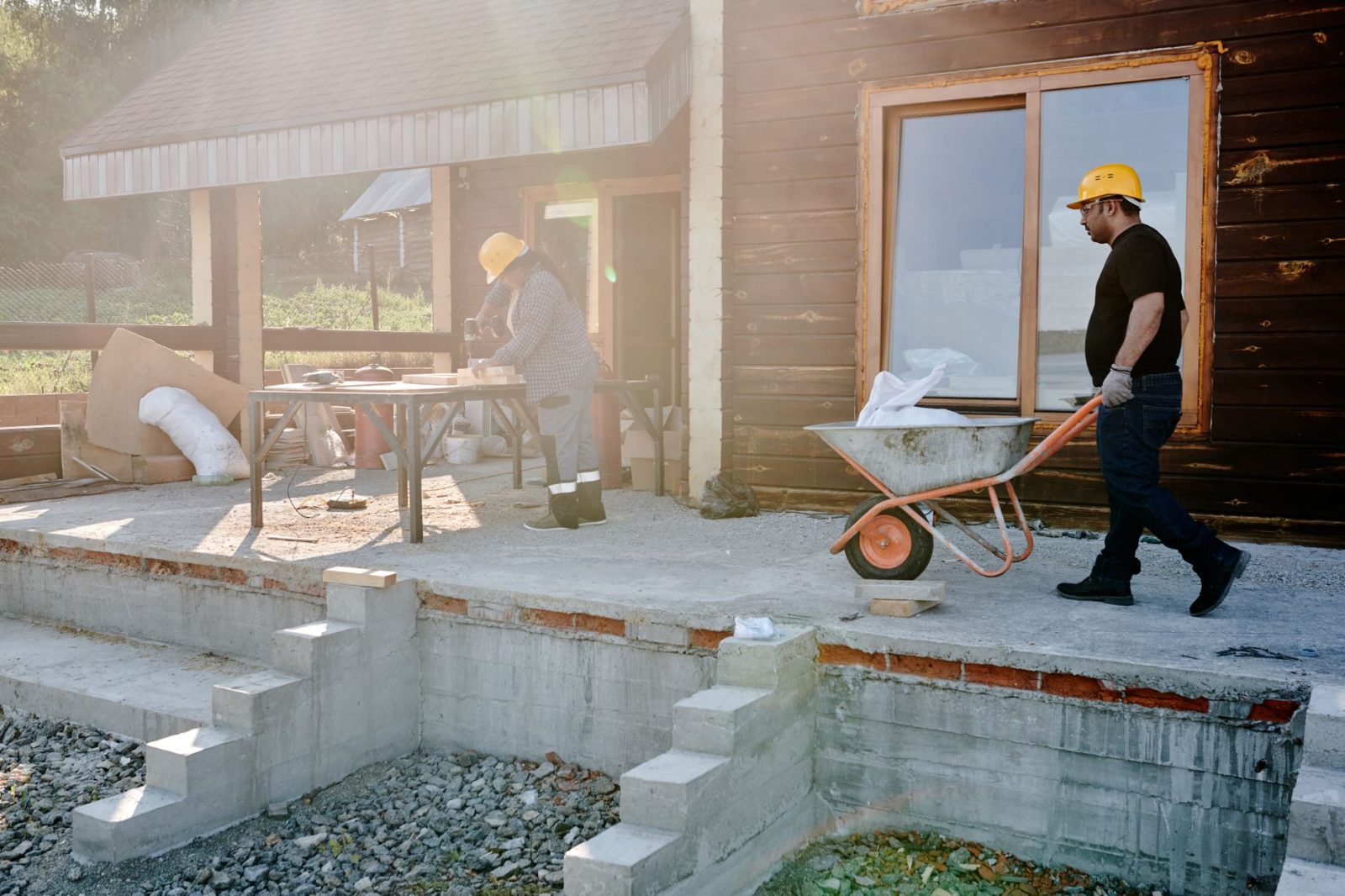
Photo by Mikael Blomkvist on Pexels

