
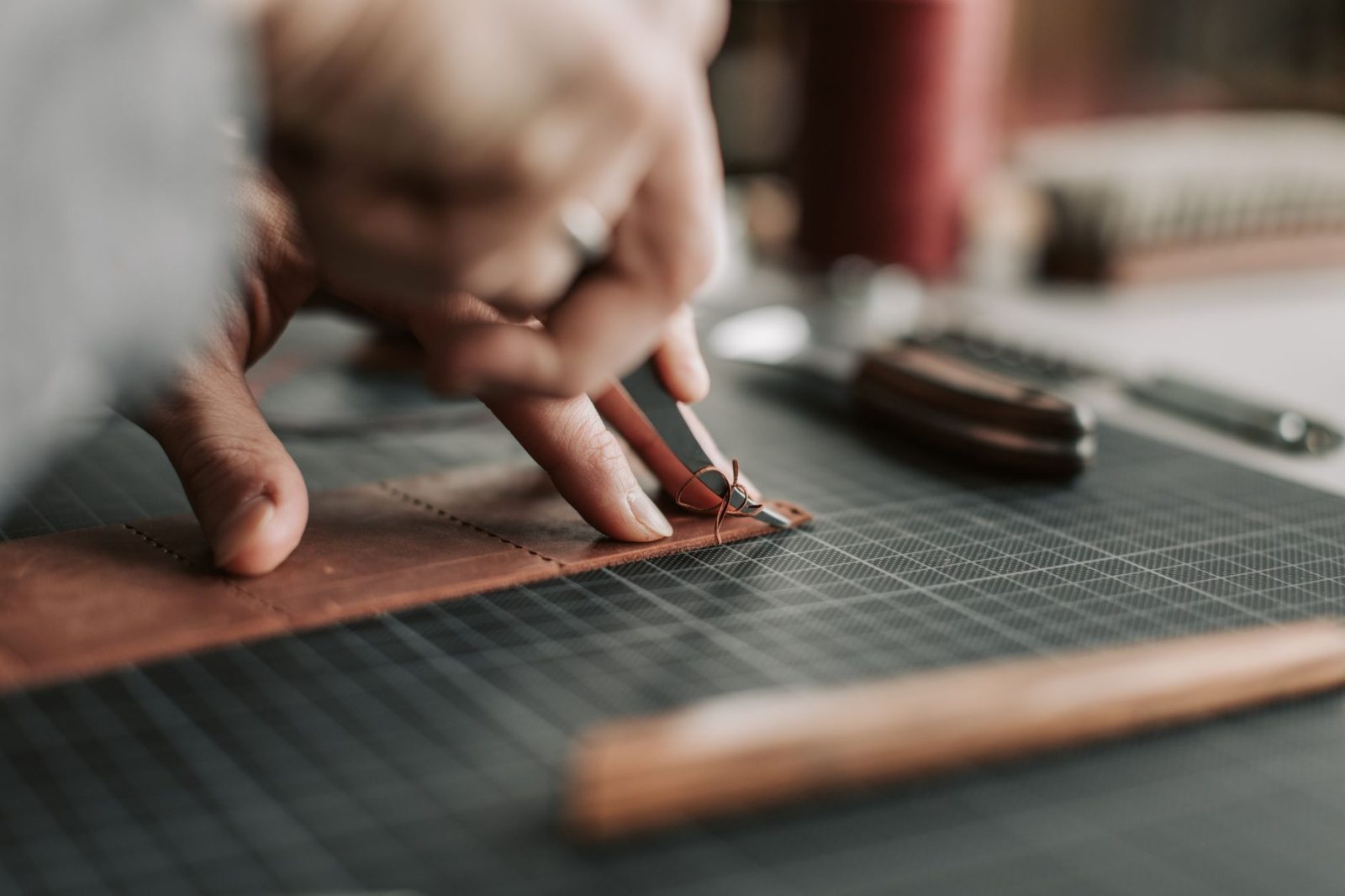
There is a particular kind of courage required to turn a craft into a company. It is not the loud, headline-grabbing sort. It is quieter — the daily decision to show up, to buy the materials, to stitch one more bag, to trust that a small enterprise can grow into something that feeds a family and employs a community. According to Catholic Relief Services, that is roughly the arc of a woman named Esther, who built a thriving leather enterprise in Rwanda’s growing leather industry.
Her story sits inside a much larger conversation playing out across outlets this month — one about the practical, unglamorous power of mentorship and support in helping ordinary people become business builders. Esther’s is the version of that story with hands in it: cut hide, needle, thread, and the slow accumulation of orders.
A craft turned into a company
The reported details of Esther’s business are grounded in a simple, durable idea: take a traditional skill, apply it to a market with real demand, and build steadily from there. Rwanda’s leather sector has been described as a growing industry, which matters for an entrepreneur like Esther. A rising market gives a small producer room to find customers, raise prices as quality improves, and reinvest in tools and talent.
What the source material emphasizes is that this was framed as a genuine small-business success story — not a overnight phenomenon, but a thriving enterprise assembled over time. That distinction is important. The founders who last are rarely the ones with the flashiest launch. They are the ones who treat their work as a long game, learning the trade, the costs, and the customers until the business can stand on its own.
Why support systems matter
Esther’s story lands in the same week that a striking number of outlets are making the same quiet argument: entrepreneurs do better when someone has their back. The pattern across the coverage is hard to miss — and it reinforces what Esther’s experience suggests about the value of structured support behind individual effort.
The United Nations Development Programme has framed mentoring as a key ingredient in supporting women and youth entrepreneurship, the demographic that so often faces the steepest climb to capital, networks, and credibility. That framing fits Esther’s profile closely: a woman building a production business in a developing market, where guidance and access can be the difference between a workshop that survives and one that scales.
The World Economic Forum has similarly spotlighted how mentorship can drive business growth, framing an experienced guide not as a luxury but as a growth lever. And at the hands-on end of the spectrum, Entrepreneur has catalogued concrete lessons that mentorship delivers to a founder’s journey — the kind of practical knowledge that shortens the distance between a good idea and a working business.
The unglamorous work behind the win
It is worth being honest about what the available material does and does not tell us. The specifics of Esther’s revenue, her headcount, her exact timeline, and the particular mentors or programs that may have helped her are not fully detailed in the snippets provided. What is reported is the shape of the achievement: a small business in Rwanda’s leather industry that became a thriving enterprise, told as a success story by an organization that works on the ground with communities like hers.
Rather than fill those gaps with invention, it is more honest — and more useful — to notice what her story has in common with the others circulating this week. Across the coverage, a few consistent truths about building a business emerge:
- Trade knowledge compounds. A craft like leatherwork rewards repetition. Every bag made is a lesson in cost, quality, and speed.
- Markets matter as much as effort. Building in a growing industry gives a small producer the tailwind that sheer hard work alone cannot supply.
- Nobody does it entirely alone. Whether it is a formal mentor, a development program, or a community of peers, the founders who break through tend to have help.
- Steady beats sudden. A thriving enterprise is usually the product of years of unremarkable, consistent decisions.
A story that rhymes with many others
What makes Esther’s case resonate is how unexceptional its ingredients are — and how exceptional the outcome can be when they come together. A skill. A market. Support. Persistence. It is the same recipe that shows up again and again in the stories of founders who started with very little and built something that outlasted the doubt.
That theme runs through much of this site’s own coverage of grounded, human business journeys. The idea that a second chance and the right backing can rebuild a livelihood sits at the heart of stories like From Refugee to Entrepreneur: The Quiet Power of a Second Start and Anil’s Second Start. And the quiet, catalytic role of someone who believes in a founder before anyone else does is exactly the dynamic explored in The Mentor Who Saw Utah’s Entrepreneurs First.
Esther’s enterprise belongs in that company. Hers is not a story of disruption or venture rounds. It is a story about a woman, a trade with deep roots, and a market opening up around her — the kind of success that does not trend but does endure.
What her example offers
For anyone weighing whether to turn a skill into a livelihood, the lesson embedded in Esther’s reported journey is reassuringly plain. You do not need to invent something the world has never seen. You need a real craft, a real market, and the willingness to keep going when the early returns are thin. Support — a mentor, a program, a community — makes that climb survivable.
The remaining details of Esther’s story are best left to the organization that told it first, which knows her circumstances far better than any summary could. But the outline is enough to recognize something true and encouraging: that in a growing industry, with the right help and a steady hand, an ordinary maker can build an extraordinary business — one stitch at a time.
Photo by Vlada Karpovich on Pexels

