
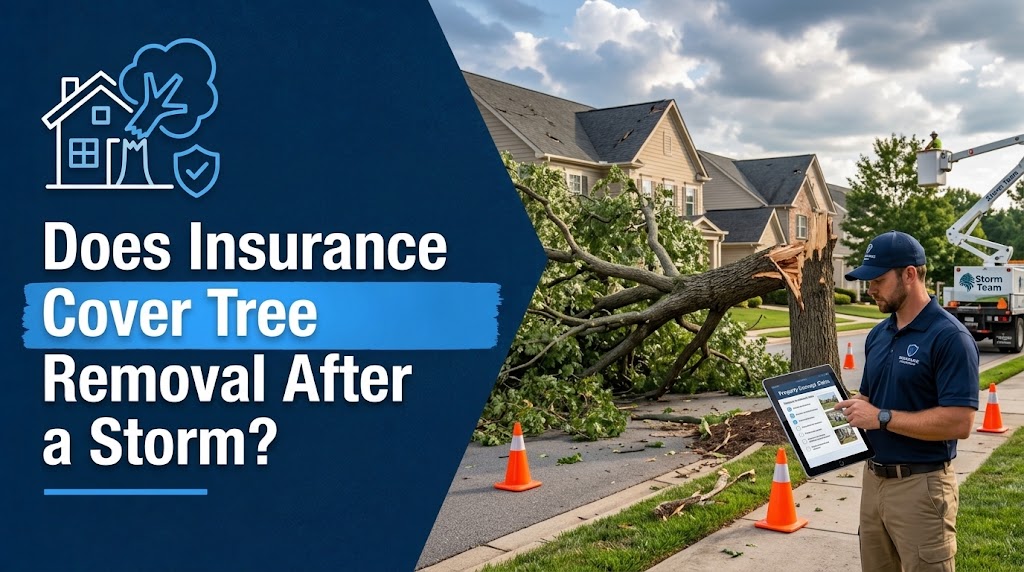
Severe storms can cause significant damage to homes, yards, and surrounding properties. In Alpharetta, Georgia, strong winds, heavy rain, and thunderstorms can cause trees to fall, break branches, and damage roofs, fences, driveways, and other structures. After a storm, homeowners often face an important question: does homeowners insurance cover the cost of removing a fallen tree?
The answer depends on your insurance policy, the cause of the damage, and where the tree landed. Some policies cover tree removal when a fallen tree damages an insured structure, while others may provide limited coverage when a tree blocks an essential access route. Understanding these distinctions can help homeowners make informed decisions after severe weather.
When Does Homeowners Insurance Cover Tree Removal?
Homeowners insurance may cover tree removal when a covered storm event causes a tree to fall and damage an insured structure. However, coverage varies by policy, deductible, and specific circumstances.
When a Tree Falls on Your Home
If a storm causes a tree to fall onto your roof, garage, or another covered structure, your homeowners insurance may pay for the resulting damage and reasonable tree removal expenses. For example, if strong winds knock a large oak tree onto your roof, your policy may cover roof repairs and some of the cost of removing the tree.
Coverage limits may apply to debris removal, so homeowners should review their policy carefully. It is also important to document the damage before cleanup begins whenever doing so is safe.
When a Tree Damages a Fence or Other Structure
A fallen tree can damage fences, sheds, detached garages, and other structures. Depending on your policy, the resulting repairs and removal costs may qualify for coverage.
The insurer will generally consider whether the damage resulted from a covered event, such as wind or lightning. Your deductible and the cost of repairs will also influence whether filing a claim makes financial sense.
When a Tree Blocks Your Driveway
Some insurance policies provide limited coverage for removing a fallen tree that blocks a driveway or a ramp designed for wheelchair access. However, this coverage may be subject to specific conditions and dollar limits.
A tree that falls across a driveway without damaging a covered structure may not qualify under every policy. Contact your insurance company to confirm whether your situation is covered before arranging removal, unless immediate action is necessary to protect people or property.
When Does Insurance Not Cover Tree Removal?
Not every fallen tree qualifies for insurance coverage. Several common situations may leave homeowners responsible for removal expenses.
A Tree Falls Without Causing Damage
If a healthy tree falls in your yard during a storm but does not damage your home, garage, fence, or another covered structure, insurance may not pay for removal. Some policies offer limited exceptions, but coverage should never be assumed.
Homeowners may need to pay out of pocket to remove the tree and restore the yard.
A Tree Falls Because of Neglect
Insurance companies may deny claims when a tree falls because of an excluded cause or a maintenance issue addressed by the policy. For example, a visibly decayed tree that has been neglected for years may complicate a claim, especially if the insurer determines that the damage resulted from deterioration rather than a covered storm event.
Regular inspections and timely tree maintenance can reduce hazards and help protect your property.
A Neighbor’s Tree Falls on Your Property
If a neighbor’s tree falls onto your property during a storm, responsibility may depend on the circumstances. If the tree was healthy and fell because of severe weather, your homeowners insurance may cover qualifying damage to your home.
If the tree was visibly hazardous and the neighbor knew about the danger but failed to address it, liability questions may arise. Keep photographs, inspection records, and relevant communications, and consult your insurer before assuming who must pay.
Knowing What Your Policy Covers After Storm Damage
Knowing what your policy covers helps Alpharetta homeowners after storm damage. Reviewing your policy before severe weather strikes can help you understand your deductible, debris removal limits, covered structures, and exclusions. When a tree falls, contact your insurer promptly and ask whether the removal costs are covered under your specific circumstances.
Homeowners should also consider the qualifications and insurance of the tree care company they hire. Professional assistance can help assess hazards, remove fallen trees safely, and prevent additional property damage.
What to Do After a Storm Damages a Tree
Taking the right steps after a storm can help protect your family, property, and potential insurance claim.
1. Prioritize Safety
Stay away from hanging branches, leaning trees, and downed power lines. Never attempt to cut a tree that is resting on your home or tangled in electrical wires. Contact emergency services or the utility provider when necessary.
2. Document the Damage
Take photographs and videos of the fallen tree, damaged structures, and surrounding area from a safe distance. Record the date of the storm and keep receipts for any emergency services or temporary repairs.
3. Contact Your Insurance Company
Report the damage as soon as reasonably possible. Ask about coverage, deductibles, approved contractors, and any documentation required before removal begins.
Avoid making permanent repairs beyond what is necessary to prevent further damage until your insurer has explained the next steps. Do not delay urgent safety measures while waiting for an adjuster.
4. Hire a Qualified Tree Removal Professional
Large fallen trees can be dangerous, particularly when branches are suspended above structures or trunks are under tension. A professional tree service has the equipment and training needed to assess the situation and carry out removal safely.
Homeowners in nearby communities can also seek professional help through services such as Tree removal Milton when storm damage affects their property. Searching for milton tree removal can help identify local providers, but always verify licensing where applicable, insurance, experience, and written estimates before hiring.
How Much Does Storm-Related Tree Removal Cost?
The cost of removing a fallen tree depends on its size, location, condition, and proximity to buildings or utility lines. A small tree in an open yard may cost considerably less to remove than a large tree resting on a roof.
Other factors include emergency response requirements, equipment access, debris hauling, and stump removal. These services may be priced separately.
Before approving the work, request an itemized estimate that explains the removal process and any additional charges. If insurance may cover the expense, ask your insurer whether contractor estimates or inspections are required. Remember that a covered loss does not necessarily mean every removal expense will be reimbursed.
Frequently Asked Questions
Does homeowners insurance cover tree removal after every storm?
No. Coverage depends on the cause of the fall, the damage involved, and the policy terms. Storm damage to an insured structure may qualify, while a tree falling harmlessly in the yard may not.
Will insurance pay to remove a tree that falls on my roof?
Many homeowners policies cover qualifying damage caused by a fallen tree and may include limited debris removal coverage. Your deductible, policy limits, and exclusions determine the final benefit.
Does insurance cover removing a dead tree before a storm?
Routine preventive removal is generally considered a maintenance expense rather than a covered insurance loss. Removing hazardous trees before severe weather can help reduce the risk of property damage.
Should I remove a fallen tree before the insurance adjuster arrives?
Contact your insurer first when practical and document the damage. However, do not delay necessary emergency measures to protect people or prevent further damage. Keep records and receipts for the work performed.
Can I choose my own tree removal company?
Often, homeowners can choose their contractor, but some insurers have preferred providers or specific requirements. Confirm the rules with your insurer and obtain a written estimate before proceeding when possible.
What if the removal cost is less than my deductible?
If the total covered loss is less than your deductible, your insurer may not pay benefits for that claim. Compare the expected repair and removal costs with your deductible and discuss your options with your insurance company.
Conclusion
Tree removal after a storm can be expensive, especially when a large tree damages a roof, garage, or other structure. Homeowners insurance may cover removal when the tree falls because of a covered event and meets the policy’s requirements, but coverage is not guaranteed in every situation.
Alpharetta homeowners can prepare by understanding their insurance policy, maintaining trees, documenting storm damage, and contacting their insurer promptly after an incident. Hiring an experienced tree removal professional also helps ensure the work is completed safely and efficiently.
Whether you need emergency assistance in Alpharetta or professional tree removal in Milton, taking a careful approach can help protect your property, manage unexpected expenses, and make the recovery process less stressful.

