
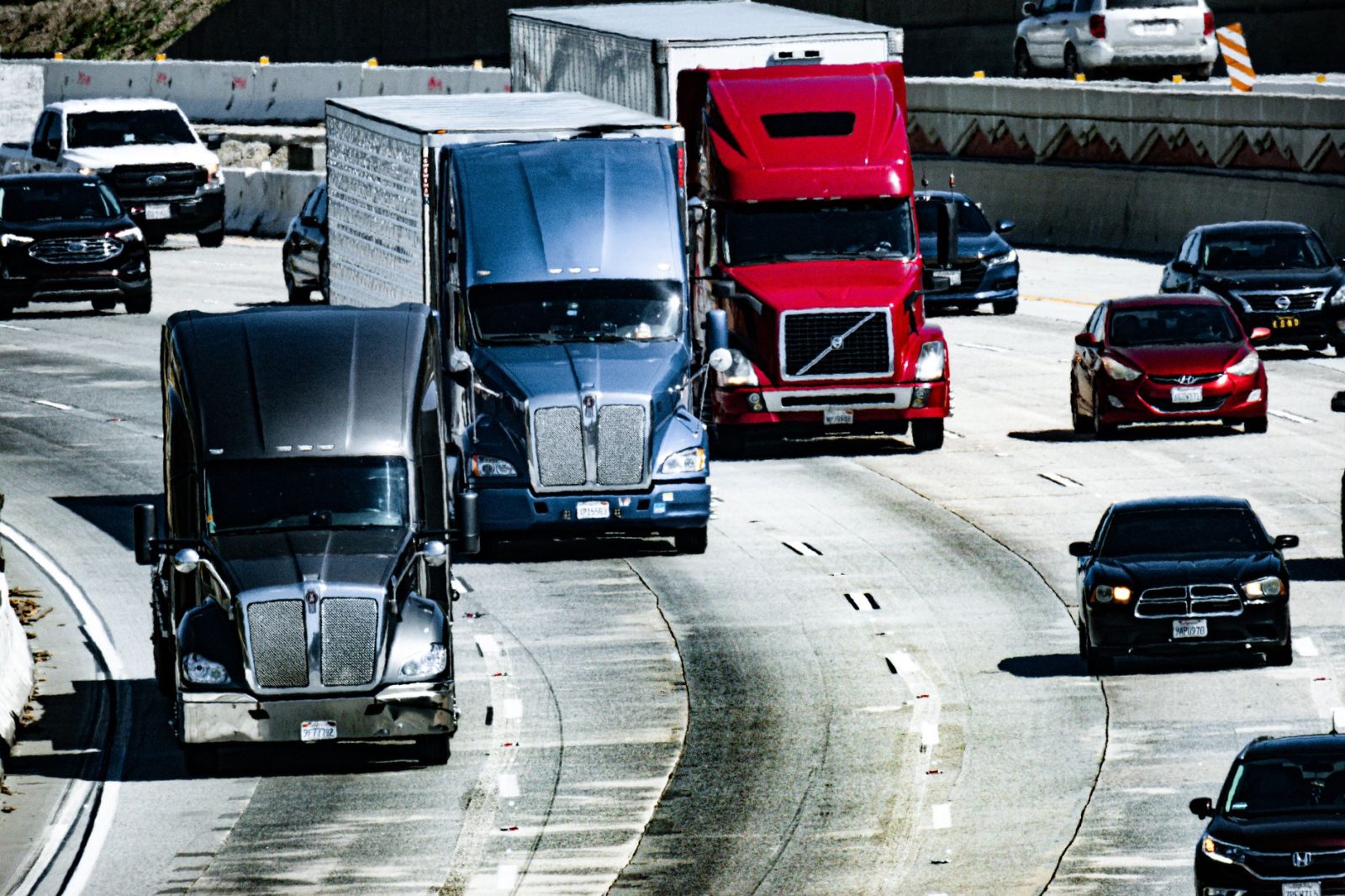
Some businesses are born in boardrooms. This one, as reported, started at a dinner table — in the middle of an argument.
That is the origin story behind the logistics platform founded by Gaurav Biswas, a venture that according to CNBC now has roughly 75,000 trucks running on it. The outlet describes the company as the “Uber of trucks,” a shorthand that captures the ambition neatly: take an old, fragmented, paper-heavy industry and give it the on-demand ease people now expect from a smartphone app.
The details that have been reported are deliberately modest in this piece, because the honest thing to do with a story like this is to tell what is known and flag what isn’t. What is known is compelling enough on its own.
The problem hiding in plain sight
Freight trucking is one of those industries most people never think about until something they ordered doesn’t arrive. Behind the scenes, it has long been notoriously inefficient. Trucks drive loaded in one direction and return empty. Shippers struggle to find reliable carriers. Drivers and small fleet owners wait on payments and chase the next job through a tangle of middlemen and phone calls.
That inefficiency is exactly the kind of gap that creates an opening for a founder willing to look hard at a boring problem. According to CNBC’s account, a dinner-table disagreement was the spark that set Biswas thinking about how trucks are matched to the goods they carry — and whether technology could do the matching better than the status quo.
It is a familiar pattern among the builders this publication tends to admire: the idea doesn’t arrive as a flash of genius about a glamorous product. It arrives as irritation with something that plainly doesn’t work, and the stubborn conviction that it could.
From an idea to 75,000 trucks
The leap from a frustrated conversation to a platform carrying tens of thousands of trucks is enormous, and it rarely happens quickly. Building a two-sided marketplace — one that has to win the trust of shippers on one side and drivers on the other, simultaneously — is among the harder challenges in business. Neither side shows up until the other one is already there, which means early days are often a grind of convincing people to take a chance on something unproven.
The figure reported by CNBC — about 75,000 trucks on the platform — is the kind of number that only accumulates through years of that unglamorous trust-building. Each truck represents a driver or a fleet owner who decided the platform was worth their business. That is not a metric you buy; it is one you earn load by load.
The “Uber of trucks” label does useful work here. It tells you the model in four words: an app that connects supply and demand in real time, cutting out friction and idle time. But it also undersells how different freight is from ride-hailing. A passenger trip is short and simple. A freight haul can span borders, days, and a web of regulations, documentation, and payment terms. Matching a truck to a load is only the beginning of what a platform like this has to get right.
Part of a bigger pattern
Biswas’s story lands inside a wave of recent reporting about founders who built something substantial from very little. The same cluster of coverage includes a San Antonio entrepreneur who, as reported, turned a Brooklyn kitchen and a single credit card into a multimillion-dollar beauty business; a gym operator who told The Times that his company “had nothing” before growing into a £26m operation; and an Afghan-born founder who, according to Fortune‘s broader coverage of bootstrapped builders, grew a $150m brand while keeping her focus on women back home.
What links them is not the industry — vape pods, gyms, wine importing, aerospace components, beauty — but the trajectory. Each started with far less than the outcome would suggest, and each got there by solving a real problem for real customers. It is the same arc this site has followed in stories like the side hustle that became a billion-dollar company and how Stephen Turner built Group55 from just £700.
The trucking platform fits that mold in a particularly satisfying way, because logistics is the ultimate unsexy sector. There is no viral product shot, no influencer moment. There is just the quiet, compounding value of making freight move more efficiently — the sort of improvement that ripples out to everyone whose goods ride on those trucks.
What we know, and what we don’t
In the interest of accuracy, it’s worth being clear about the limits of the available material. The reporting establishes the founder’s name, the dinner-table origin, the “Uber of trucks” positioning, and the roughly 75,000-truck scale. It does not, in what has been provided here, pin down the founding year, the company’s revenue, its geographic footprint, or the specifics of the argument that started it all. Those gaps are better left open than filled with guesswork.
What the known facts do support is a recognizable and genuinely uplifting narrative: a person who noticed a broken system, believed it could be fixed, and then did the long, patient work of building the thing that fixes it. The scale he has reportedly reached suggests the bet was a sound one.
For anyone drawn to the mechanics of building something durable rather than merely flashy, there is a lesson in the comparison to other quiet operators — like the bootstrapped startup that moved $280M. The most consequential companies are often the ones solving problems most of us never see.
The grit underneath the headline
It is easy to read “75,000 trucks” and move on. It is harder, and more honest, to sit with what that number required: years of persuading skeptical drivers, building technology robust enough to be trusted with real freight, and staying with a dull, difficult problem long after the initial spark of the argument had faded.
That is the part of the story that actually matters. The dinner-table moment makes a good headline. The decade-defining persistence that followed is what built the company. On the facts available, Biswas appears to have had both — and that combination, more than any single clever idea, is what turns a frustrated conversation into a platform that keeps a continent’s goods moving.
Photo by David Brown on Pexels

