
Most success stories skip the part where everything goes wrong. They begin at the ribbon-cutting, the viral moment, the queue snaking down the street. But the more honest ones start earlier — in the quiet after a business has closed its doors, when the founder has to decide whether to try again.
That is where the story of Bryan Soriano, the Filipino entrepreneur behind J’s Crispy Chicken Isaw, really begins. Before he earned the nickname the “Isaw King,” Soriano experienced the failure of three different businesses, according to a report shared by the Philippine Star. Rather than treat those setbacks as the end of the road, he used them as the foundation for a snack brand that now wears its Filipino identity with pride.
From humble street food to a proud brand
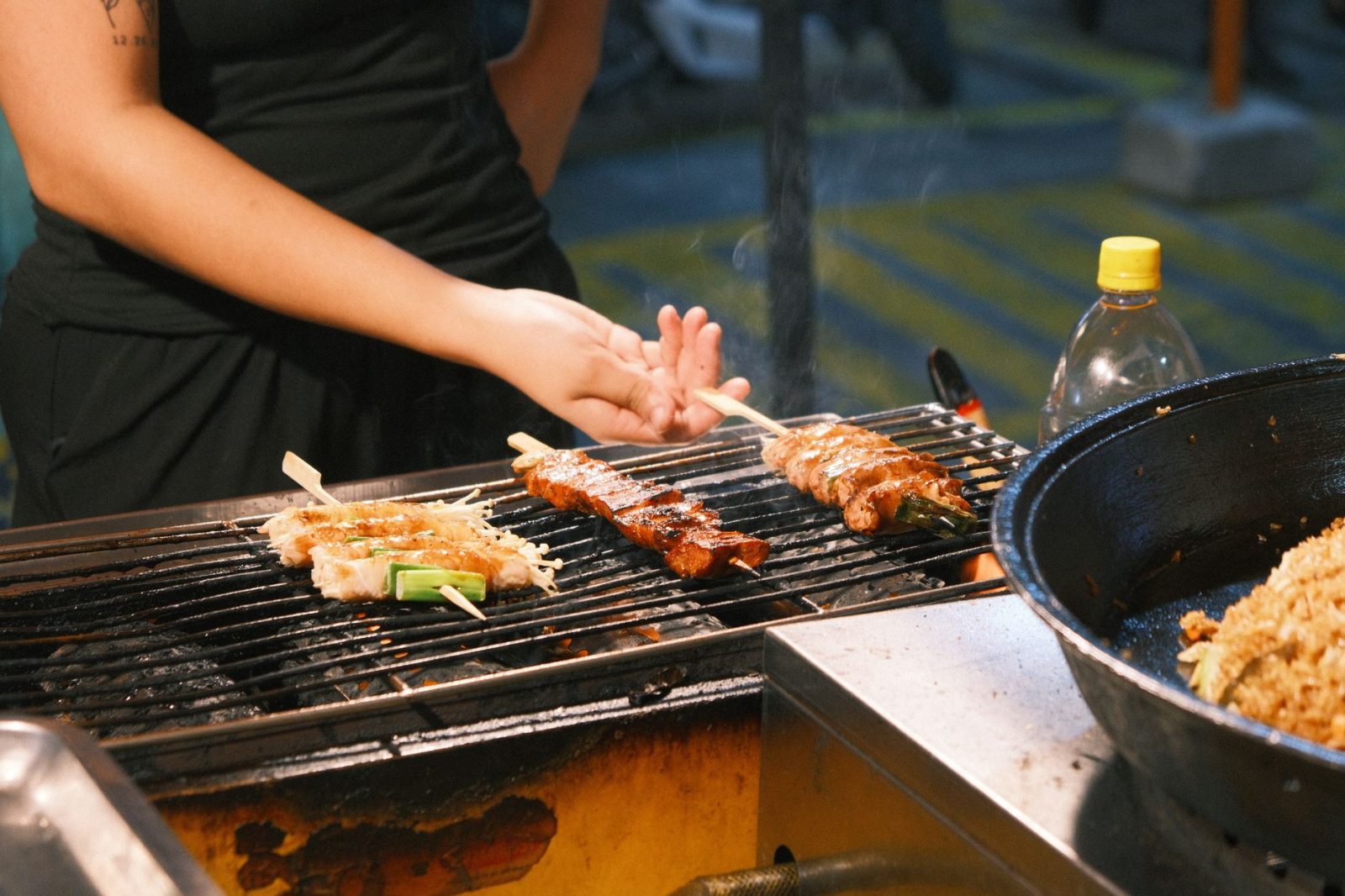
Isaw — grilled chicken or pork intestines skewered and cooked over charcoal — is one of the most beloved street foods in the Philippines. It is the taste of a sidewalk grill at dusk, of friends gathered around a cart, of an entire national childhood compressed into a few peso coins. Taking something that familiar and turning it into a branded product is no small ambition. It means persuading people to pay for, and trust, a snack they have always bought casually from the nearest vendor.
Soriano’s brand, J’s Crispy Chicken Isaw, leans into that heritage rather than apologising for it. The reporting describes it as a proudly Filipino snack brand, and that framing matters. In a market crowded with imported trends and glossy franchise concepts, choosing to champion a humble local favourite is its own kind of bet — one that only pays off if the founder genuinely understands the food and the people who love it.
Three failures before the breakthrough
The detail that gives Soriano’s story its weight is the number: three. Three businesses that did not make it before the one that did. The sources available do not spell out what those earlier ventures were, how much he lost, or exactly how long the climb took — and it would be wrong to invent those specifics. What the material does make clear is the shape of the journey: repeated failure, followed by a refusal to quit, followed by a brand that finally found its audience.
Anyone who has run a small business knows how much that single sentence conceals. Each failed venture carries its own version of the same hard lessons — the supplier who let you down, the location that never drew a crowd, the margins that looked fine on paper and vanished in practice. Surviving one closure is difficult. Walking back into the arena a fourth time, after three, requires a particular stubbornness that is easy to romanticise and hard to live.
Why the “failure first” story keeps resurfacing
Soriano is far from alone in this pattern, and the wider conversation around entrepreneurship has lately been crowded with it. Business publications have been unusually candid about setbacks of late. Forbes recently laid out steps entrepreneurs can take to rebuild a brand image after failure, while on the sporting side The Times of India highlighted a Serena Williams line about how a champion is defined not by their wins but by how they rise after falling. The theme is everywhere right now, which can make it feel like a cliché.
What rescues Soriano’s story from that fate is its ordinariness. He is not a venture-backed founder raising millions, nor a celebrity packaging a comeback. He is a street-food entrepreneur who tried, failed, tried again, and built a brand around a snack ordinary Filipinos already loved. That grounded quality is precisely what makes it worth telling.
The same current runs through other recent accounts of founders starting over:
- In Nigeria, reporting has followed how one founder rebuilt the delivery company RoadRunner from what was described as the ashes of a funding winter.
- In Malaysia, outlets have covered a former food-delivery CEO whose company once generated millions now working as a delivery rider, and a young entrepreneur openly rebuilding after losing all their savings.
- In the United States, a new memoir frames an executive’s argument that failure makes for a better chief executive.
Different countries, different industries, the same underlying truth: the path to building something durable is rarely a straight line, and the founders worth learning from are usually the ones who have been knocked down more than once.
The quiet discipline behind a comeback
There is a practical thread connecting these stories, too. Starting over almost always means doing more with less. Advice aimed at later-in-life founders, including a recent piece from the Korean outlet Chosun on post-retirement startups, stresses prioritising cost control over chasing profit early on — guarding cash, keeping overheads lean, and surviving long enough to find product-market fit. For someone on their fourth attempt, that discipline is not theory. It is the difference between a business that breathes and one that suffocates.
That reality echoes a broader shift this publication has tracked in its reporting on why midlife is becoming the new startup season — the idea that experience, including the experience of failure, can be an asset rather than a liability when you finally find the right idea. Soriano’s earlier ventures, whatever they were, almost certainly taught him things about supply, pricing, and customers that no first-timer could know.
What we know, and what we don’t
In the interest of honesty, it is worth being clear about the limits of the available information. The public reporting establishes the essentials: Soriano endured three business failures, he went on to build J’s Crispy Chicken Isaw, the brand celebrates its Filipino roots, and he has become known as the “Isaw King.” Beyond that, the finer details — timelines, financials, the exact nature of his previous businesses, and how large the brand has grown — are not confirmed in the material at hand. Those gaps deserve respect rather than guesswork.
Even so, the outline alone carries its own quiet encouragement. It belongs to the same family as the broader run of solo and small-scale founders proving that you do not need a perfect record to build something people value — you need the willingness to keep showing up.
A snack, and a second chance
There is something fitting about the fact that Soriano’s eventual success came through isaw. It is not a luxury product or a disruptive gadget. It is street food, affordable and unpretentious, the sort of thing people buy on an ordinary evening. Building a proudly Filipino brand around it suggests a founder who understood, perhaps because of everything that came before, that the most reliable path forward was to serve something real to the people right in front of him.
The “Isaw King” nickname will probably stick, and it makes for a neat headline. But the more useful part of the story is the stretch nobody put on a sign: three closures, and a decision each time to start again. That is where businesses that last are usually forged — not in the triumph, but in the stubborn return to the grill.
Photo by John Joshua Mejia Jose on Pexels

