
Some ventures begin in a garage. This one, according to reports, began in Robbinsville — a quiet township in central New Jersey — with two young founders, a conviction that a small amount of capital can change a life, and a map that would eventually stretch across nine countries.
Rahul Ramakrishna and Muhammad Khalid are the names behind Aureus Microfinancing, an initiative that, as local outlet TAPinto has reported, has funded 17 refugee-led businesses. It is a modest-sounding number that carries real weight: behind each of those 17 ventures is a person who was displaced, who started over, and who found in Aureus a partner willing to bet on them.
A big idea from a small town
The detail that gives this story its charm is the distance between where it started and where it reached. Robbinsville is not a global financial hub. Yet from that starting point, the two founders built something that, according to the reporting, now touches entrepreneurs in nine countries. The arc from a single New Jersey town to a multi-country footprint is exactly the kind of grit-and-vision story that resists easy explanation — and that is worth telling carefully.
Microfinancing, at its core, is a simple proposition: small loans or grants, extended to people who are typically shut out of conventional banking, so they can launch or grow a business. It is the mechanism behind countless modern poverty-reduction efforts. What makes Aureus notable is the specific population it has chosen to serve — refugees — and the fact that it was built by founders operating from a community far removed from the camps and resettlement hubs where displacement is usually most visible.
Why refugees, and why capital matters
The choice to focus on refugee entrepreneurs places Aureus within a much larger, well-documented movement. Across the humanitarian sector, organizations have spent years making the same argument: displaced people are not merely recipients of aid, but builders, traders, designers and shopkeepers whose ambitions outlast their circumstances. The World Economic Forum has profiled refugees who became business owners, and outlets like Positive News have documented how displaced people turn adversity into enterprise once they are given a foothold.
The missing ingredient, again and again, is access to capital. Refugees frequently lack the credit history, collateral or documentation that mainstream lenders demand. That gap is precisely what microfinancing is designed to close. The pattern is visible in reporting from the refugee-support world — from UK for UNHCR’s account of how financial inclusion helped an entrepreneur named Anil thrive to HIAS’s story of a refugee building a sustainable fashion business online in Kenya. The through-line is consistent: when the financial door opens, the enterprise follows.
Readers who want to understand that dynamic up close can see it in our own coverage of how a single bank account can reset an entire life — the story of Anil’s second start captures the quiet, practical power of financial inclusion better than any statistic. It is the same engine Aureus appears to be tapping: remove the barrier, and the entrepreneurship that was always there finally has room to move.
What the numbers tell us — and what they don’t
It is worth being precise about what has actually been reported, because the honest version of this story is more compelling than an inflated one. The confirmed facts are straightforward:
- Aureus Microfinancing was founded by Rahul Ramakrishna and Muhammad Khalid.
- The initiative is associated with Robbinsville, New Jersey.
- It has, according to reports, funded 17 refugee-led businesses.
- Its reach is described as spanning nine countries.
Beyond those points, much remains unconfirmed in the available material. The specific sectors those 17 businesses operate in, the size of the loans or grants extended, how repayment or reinvestment is structured, and the founders’ own ages and backgrounds are not detailed in the sources at hand. Rather than fill those gaps with invention, it is more useful to flag them — because the shape of the story is already clear, and the specifics are the kind of thing a founder like this tends to share as the work matures.
Two founders, one bet
There is something quietly instructive in the fact that Aureus has two names on it. Ventures built to serve vulnerable communities benefit from partnership — complementary skills, shared load, and the simple accountability of building alongside someone else. The reported scale of the effort, reaching across national borders from a single town, is hard to imagine as a solo project. Whatever the precise division of labor between Ramakrishna and Khalid, the collaboration itself is part of the story.
It also fits a broader truth about this kind of work: the people who build financial on-ramps for refugees are often not career bankers but outsiders who looked at an obvious injustice — talented people locked out of capital — and decided to do something about it. The global literature on refugee entrepreneurship, including McKinsey’s conversations with authors studying the field, keeps returning to the figure of tens of millions of displaced people worldwide. Against a number that large, 17 funded businesses can sound small. But scale always starts somewhere, and the value of a proof of concept is that it proves the thing can be done.
The real measure of success
The most meaningful outcome of a venture like Aureus is not the headline count of businesses or countries. It is the dignity restored on the other end of each loan — the shop that opens, the family that stabilizes, the entrepreneur who moves from surviving to building. That is the pattern documented across the refugee-support sector, and it is the pattern our own reporting on the quiet power of a second start has traced again and again.
For now, the Aureus story is still being written, and the responsible thing is to say so. What is on the record — two founders, a small-town origin, 17 refugee-led businesses, nine countries — is enough to mark this as a venture worth watching. If the early arc holds, the next chapter won’t be about where it started. It will be about how far two people were willing to take a simple idea: that a small amount of trust, extended at the right moment, can help someone rebuild an entire life.
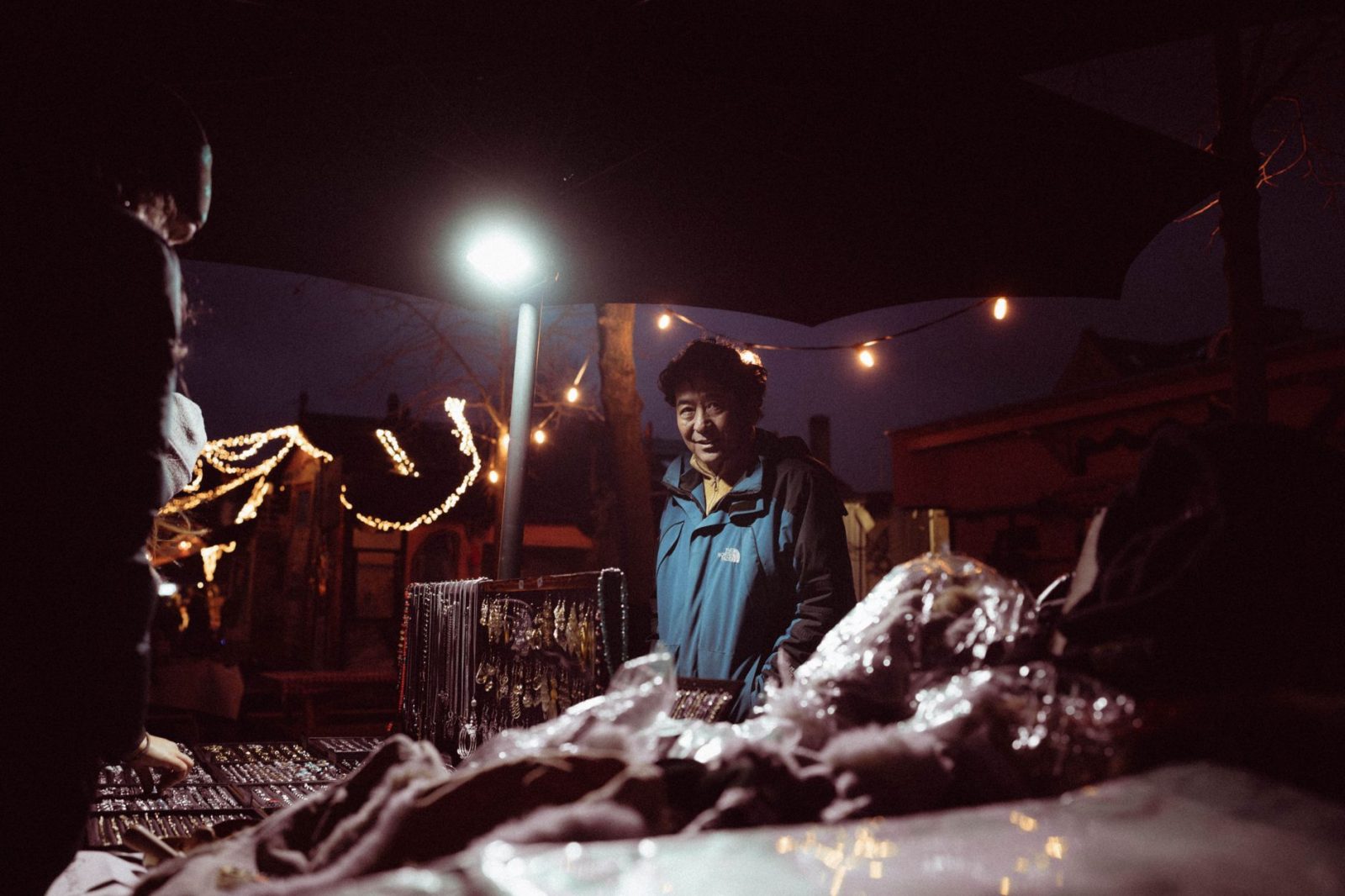
Photo by Valentin Ilas on Pexels

