
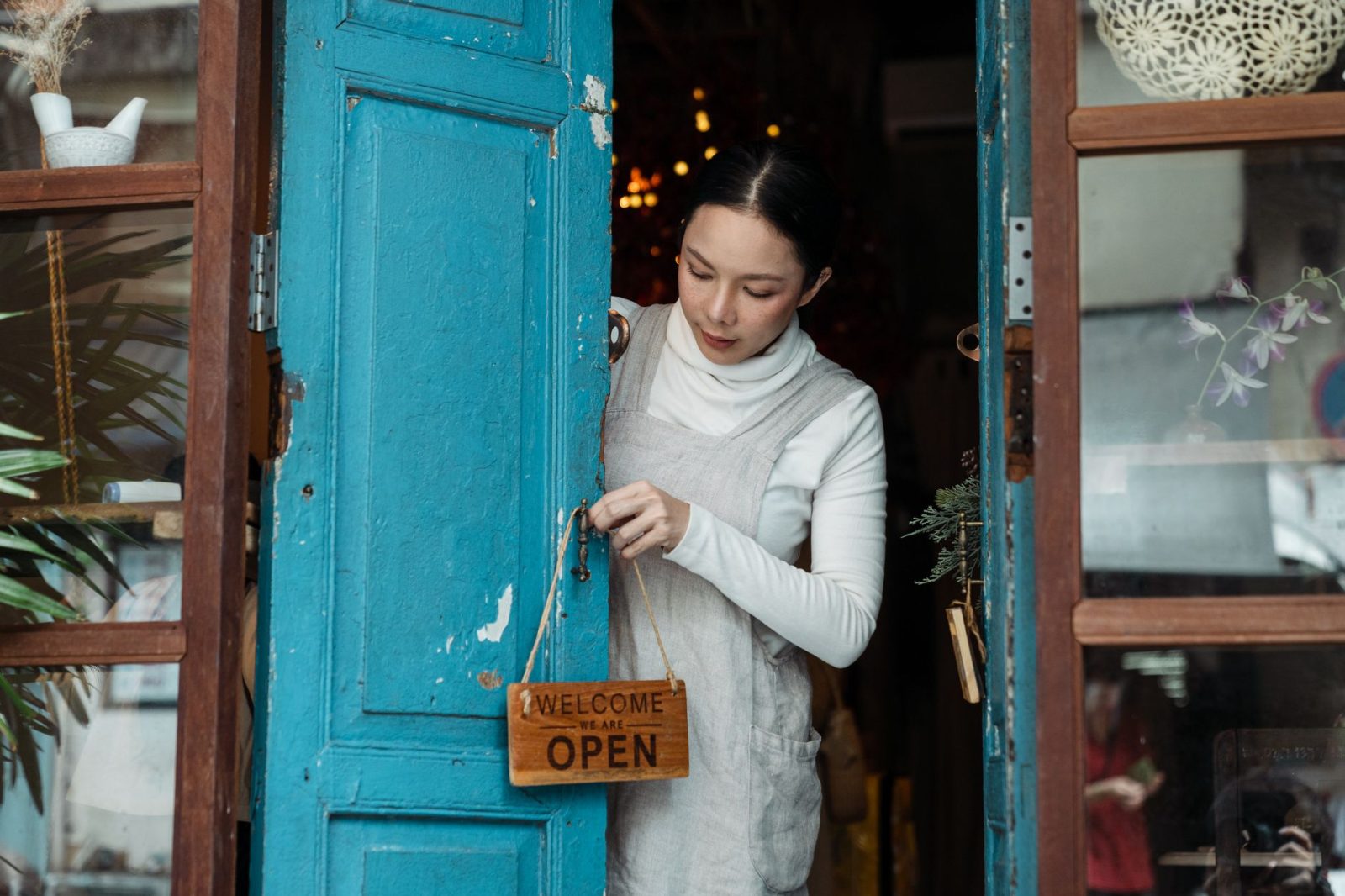
There is a certain kind of founder who doesn’t make headlines when things are going well — only when the ground gives way beneath them. Over the past several years, that ground gave way for more than a million American small businesses. And yet a steady stream of reporting, from trade publications to major newspapers, keeps returning to the same stubbornly hopeful question: how did some of them hang on?
One story that captures the answer with unusual clarity comes from the account of a woman-owned small business that weathered what ADP described as a stretch of genuinely trying times. The details are modest — no overnight fortune, no viral moment — but that is precisely what makes it worth telling. It is a story about ordinary resilience, the kind most business builders will recognize.
A crisis that hit the smallest hardest
To understand why survival stories matter, it helps to grasp the scale of what small firms faced. Research published in the Proceedings of the National Academy of Sciences documented just how severe the shock of the pandemic was: mass layoffs and closures within weeks, with many owners deeply uncertain whether they would still be open months later. The firms with the thinnest cash cushions were the most exposed — and small, independently owned businesses tend to run lean by nature.
The human cost of that fragility was staggering. As reporting has noted, Covid-19 shuttered more than a million small businesses. Behind each of those numbers was a storefront, a payroll, a family, a dream that someone had poured years into building.
Against that backdrop, the businesses that made it through weren’t simply lucky. They made choices — hard, unglamorous ones — that kept the doors open.
What survival actually looked like
The woman-owned business highlighted by ADP illustrates the pattern that runs through almost every survival account: adaptation over denial. Rather than waiting for conditions to return to normal, the owner adjusted how the business operated, watched its cash closely, and leaned on relationships with staff and customers to stay afloat. It is a quieter kind of heroism than the startup mythology usually celebrates — no disruption, just daily persistence.
That same discipline shows up in the practical playbook that outlets assembled during the worst of the downturn. Investopedia’s guidance for keeping a business going in hard times reads like a distillation of what survivors did instinctively:
- Guard cash flow obsessively, and cut non-essential spending before you’re forced to.
- Stay close to existing customers, who are cheaper to keep than new ones are to win.
- Be willing to change the offering — new products, new channels, new ways of serving people.
- Communicate honestly with staff, suppliers, and lenders rather than going quiet.
None of it is flashy. All of it is hard to execute when you’re exhausted and frightened. That gap — between knowing what to do and finding the nerve to do it — is where grit actually lives.
The reinvention instinct
If there’s a single word that recurs across the survival coverage, it’s pivot. According to a New York Times look at firms that thrived while others struggled, the businesses that found footing often did so by meeting a new need the moment created, rather than clinging to the model they’d always run. Restaurants became grocers. Makers shifted lines. Service providers moved online almost overnight.
That instinct to reinvent is exactly what powers the founders we’ve profiled on this site. It’s visible in the owners of Two Tired Garage, who turned a love of bikes into a working business, and in the entrepreneur who made a $3 million leap of faith from pouring drinks to pouring ice. The common thread is a willingness to bet on a changed version of the plan — and to keep moving when the original one stops working.
The risks of staying alive
Survival, though, is not free, and not every lifeline is safe. One of the more sobering recent threads in the coverage concerns how desperate owners sometimes reach for financing that can deepen the hole. The Los Angeles Times reported on mom-and-pop operators turning to risky merchant cash advances in a tough economy — fast money that can carry punishing costs and leave borrowers worse off than before.
It’s an important counterweight to the tidy survival narrative. The owners who came through intact often did so not just by hustling harder, but by making careful decisions about which help to accept and which to refuse. Resilience, in that sense, is as much about judgment as it is about effort.
Why these stories keep getting told
The sheer volume of recent coverage — from national papers and research journals to local outlets chronicling a single Main Street — says something about why these stories resonate. There’s an appetite for proof that persistence can still pay off, that an ordinary person with a shop or a service or a product can take a direct hit and keep standing.
Programs built to strengthen that resilience have grown alongside the attention. Support networks and training initiatives — including the kind of free, MBA-style program quietly powering veteran founders — exist precisely because survival skills can be taught, shared, and strengthened. The woman-owned business at the center of ADP’s account is one of countless examples that institutions, universities, and development centers have highlighted as models worth studying.
What remains unconfirmed
It’s worth being candid about the limits of what the available material spells out. The specific financial figures, exact timelines, and the current standing of the individual business featured by ADP are not fully detailed in the sources reviewed here, and it would be irresponsible to invent them. What the reporting does establish, consistently and across many outlets, is the shape of survival: tight cash management, honest communication, reinvention, and the discipline to avoid the traps that sink struggling firms.
That shape is the real lesson. The founders who made it through the hardest stretch in recent memory weren’t superhuman. They were, by most accounts, ordinary people who refused to let a bad season become the end of the story — and who adapted fast enough to see the next one. In a moment when so many small businesses were told to expect the worst, simply being open the following year was its own quiet triumph.
Photo by Ketut Subiyanto on Pexels

